See complex data the way it actually exists: in three real dimensions, together.
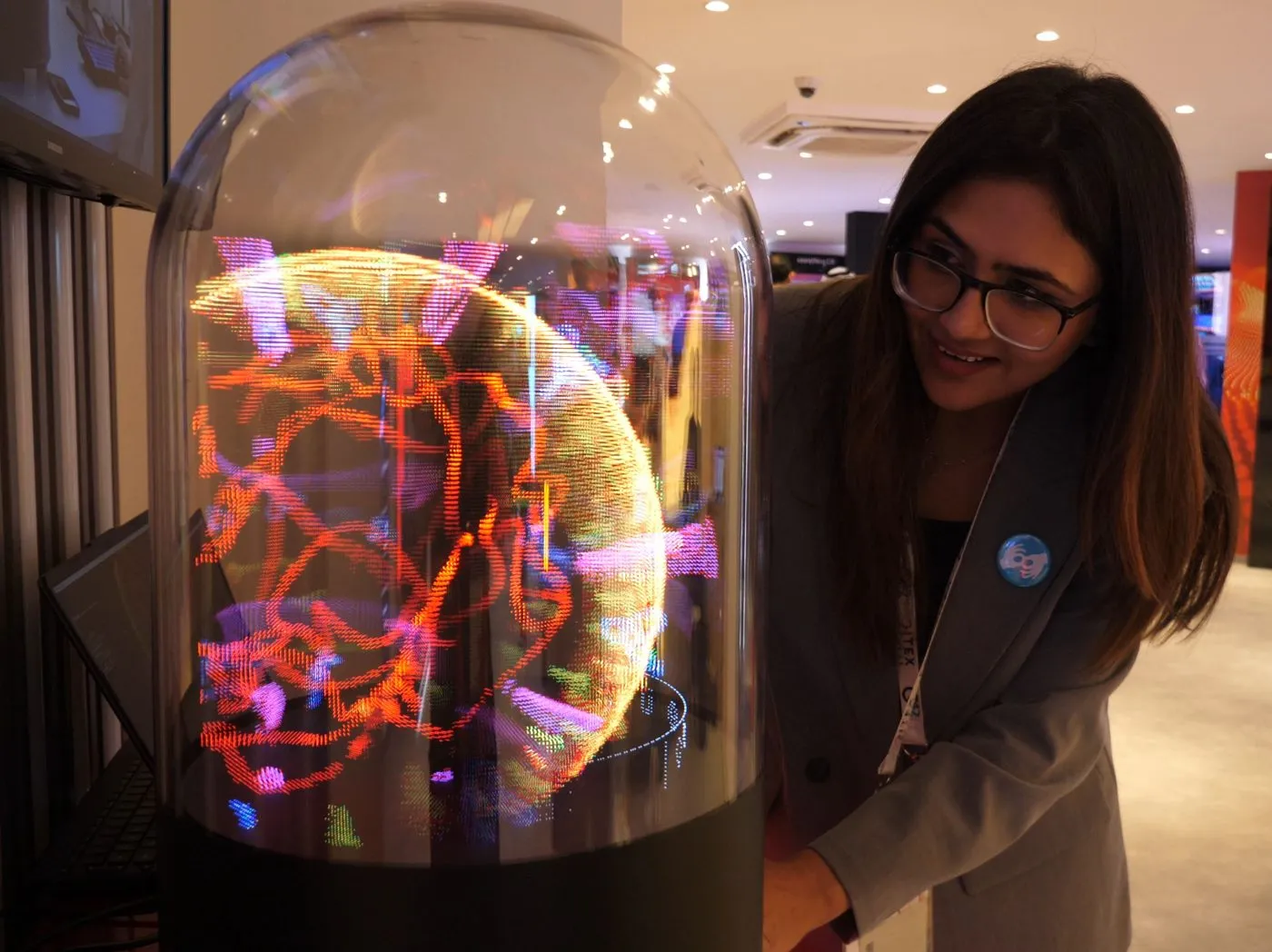
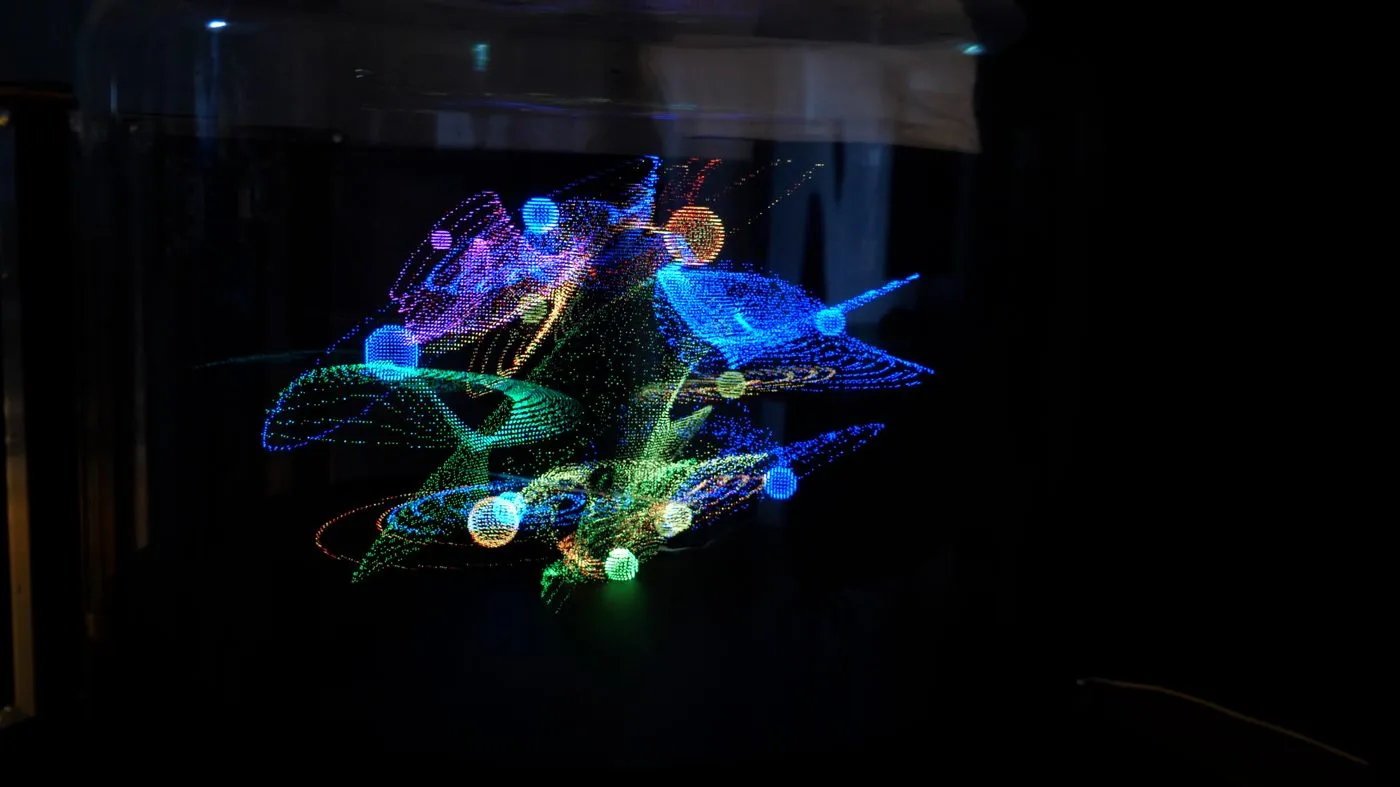
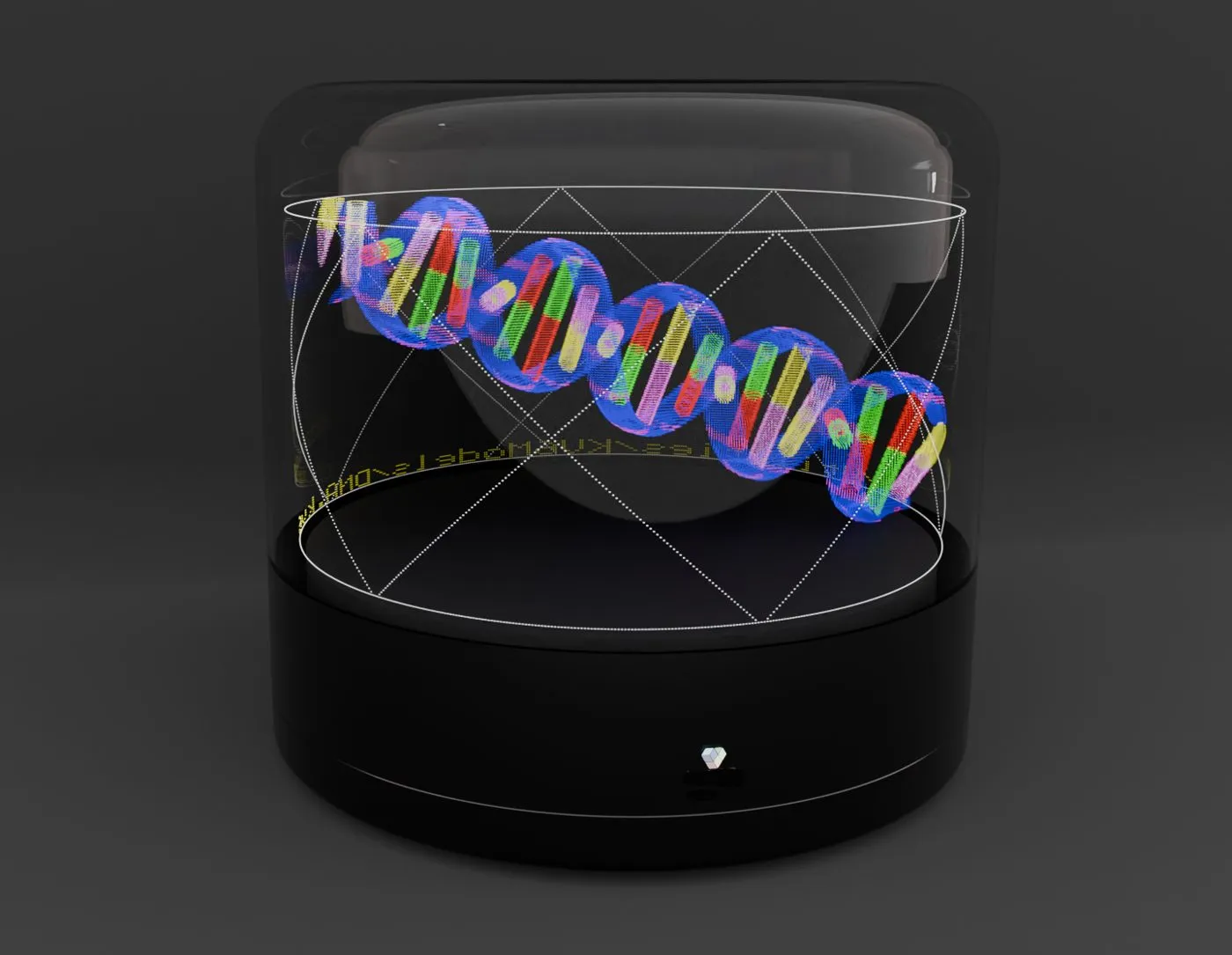
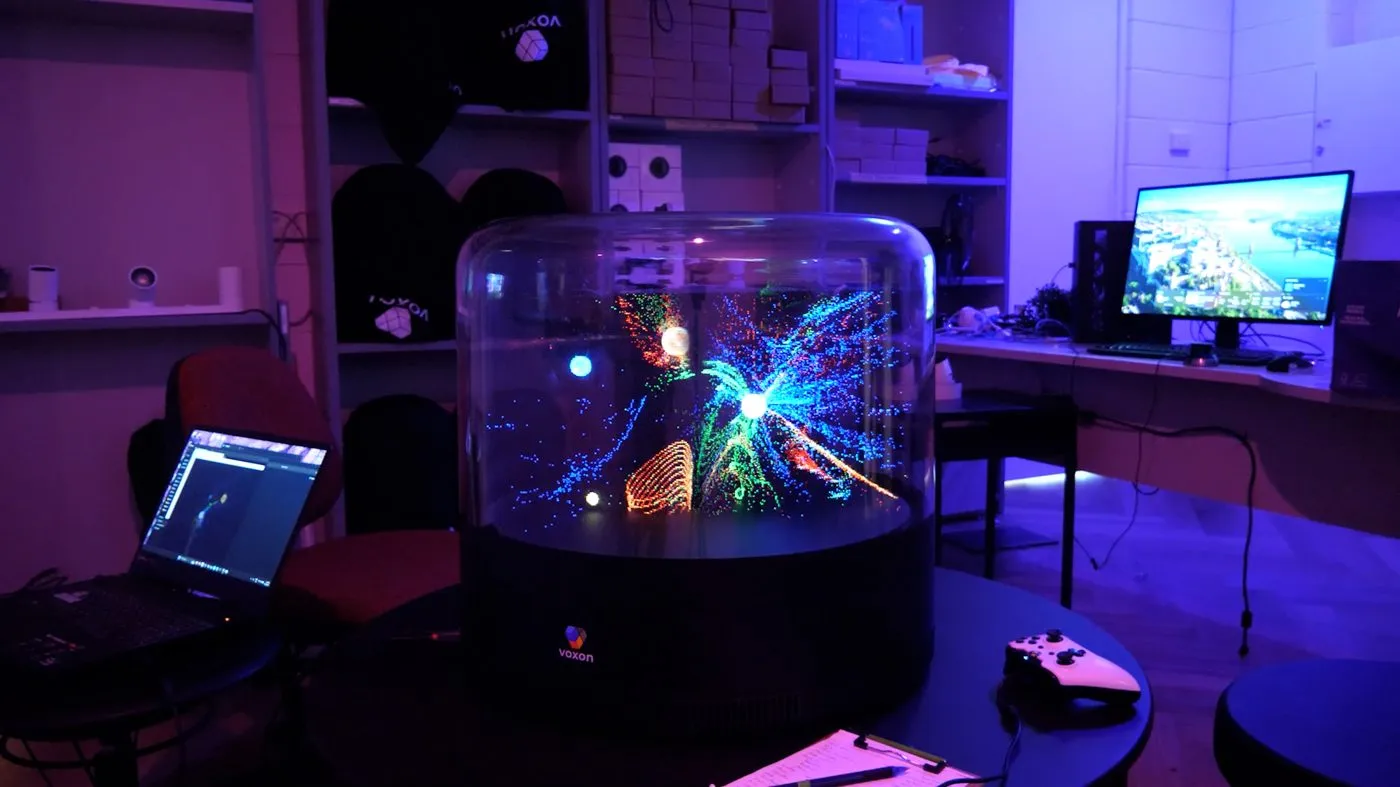
Much of science is inherently three-dimensional, spanning molecules, proteins, fluid flows, point clouds and astronomical data, yet it is almost always squeezed onto a flat screen. A Voxel Photonics display restores the missing dimension, presenting datasets as true volumetric structures researchers can inspect from any angle.
It also eases a real bottleneck in science: the friction when interdisciplinary teams interpret complex data together. Flattening 3D into slides or charts strips away spatial context, forcing everyone to rebuild the object from a 2D slice, which means misreadings and long debates just to agree on what the data shows.
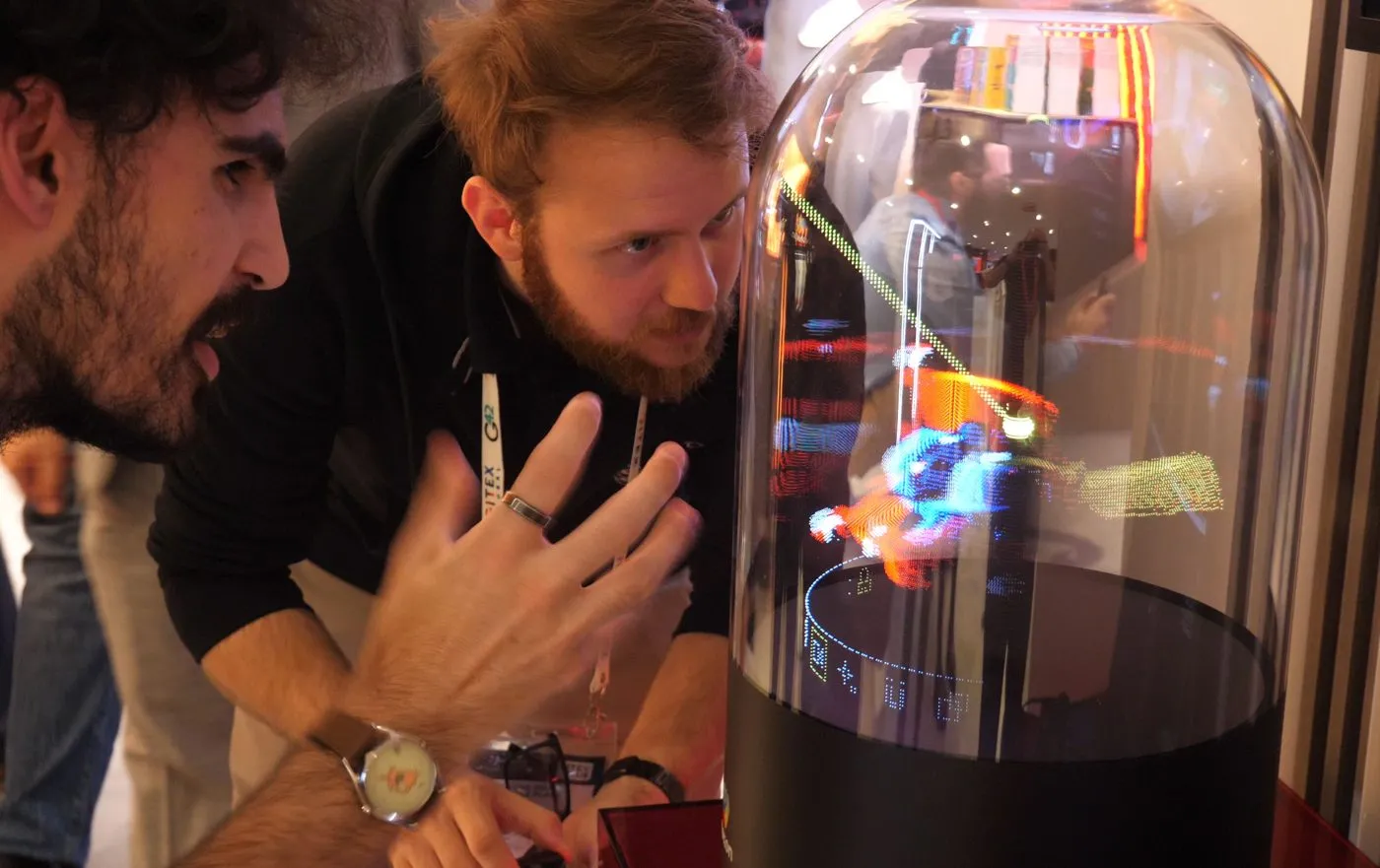
Presented as a single interactive volume, the data becomes a shared truth. Whether it is a protein, a subterranean reservoir or a climate simulation, everyone in the room, or across the globe via networked displays, sees the same relationships at once. The display speaks standard 3D formats and runs from your own code through the SDK, so existing pipelines feed it directly, turning data sharing from a passive presentation into active group exploration that accelerates consensus.
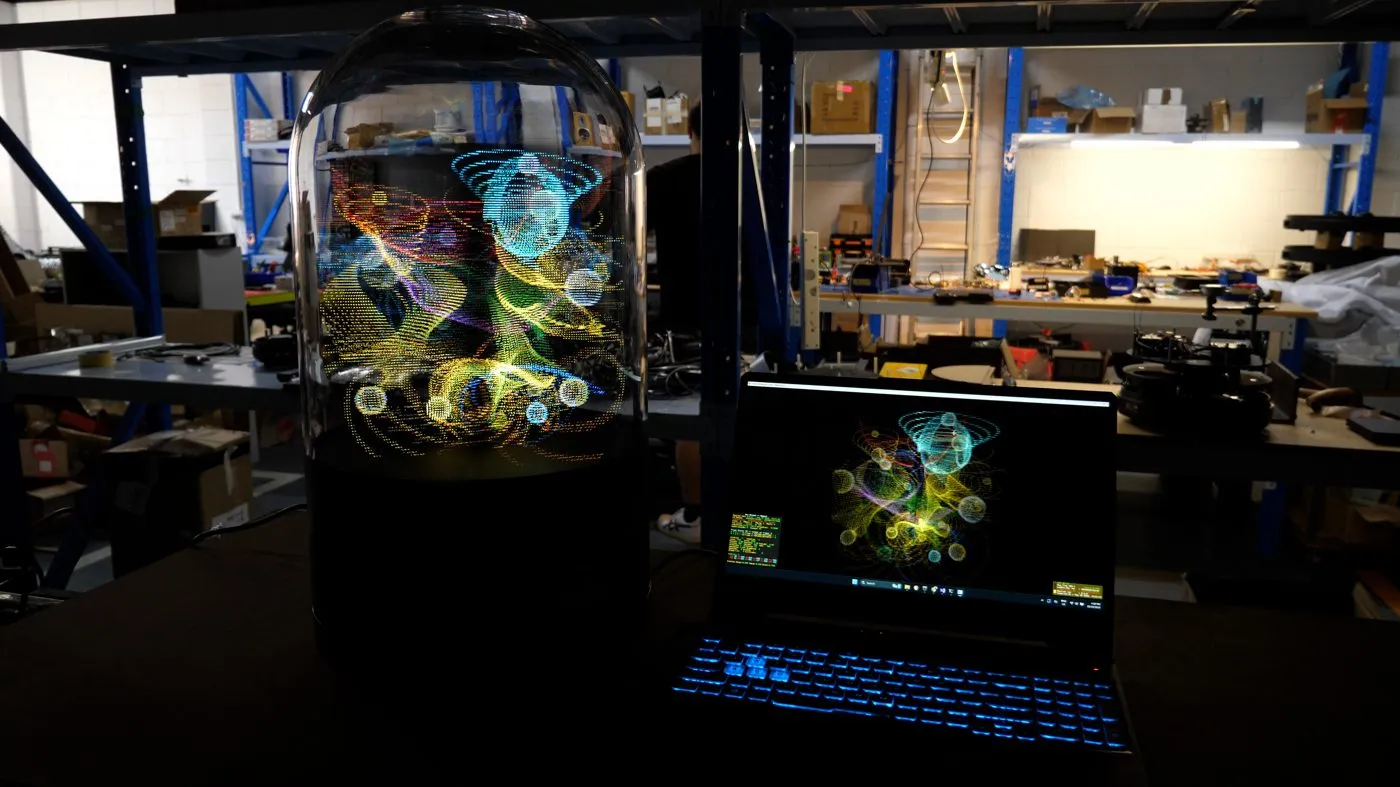
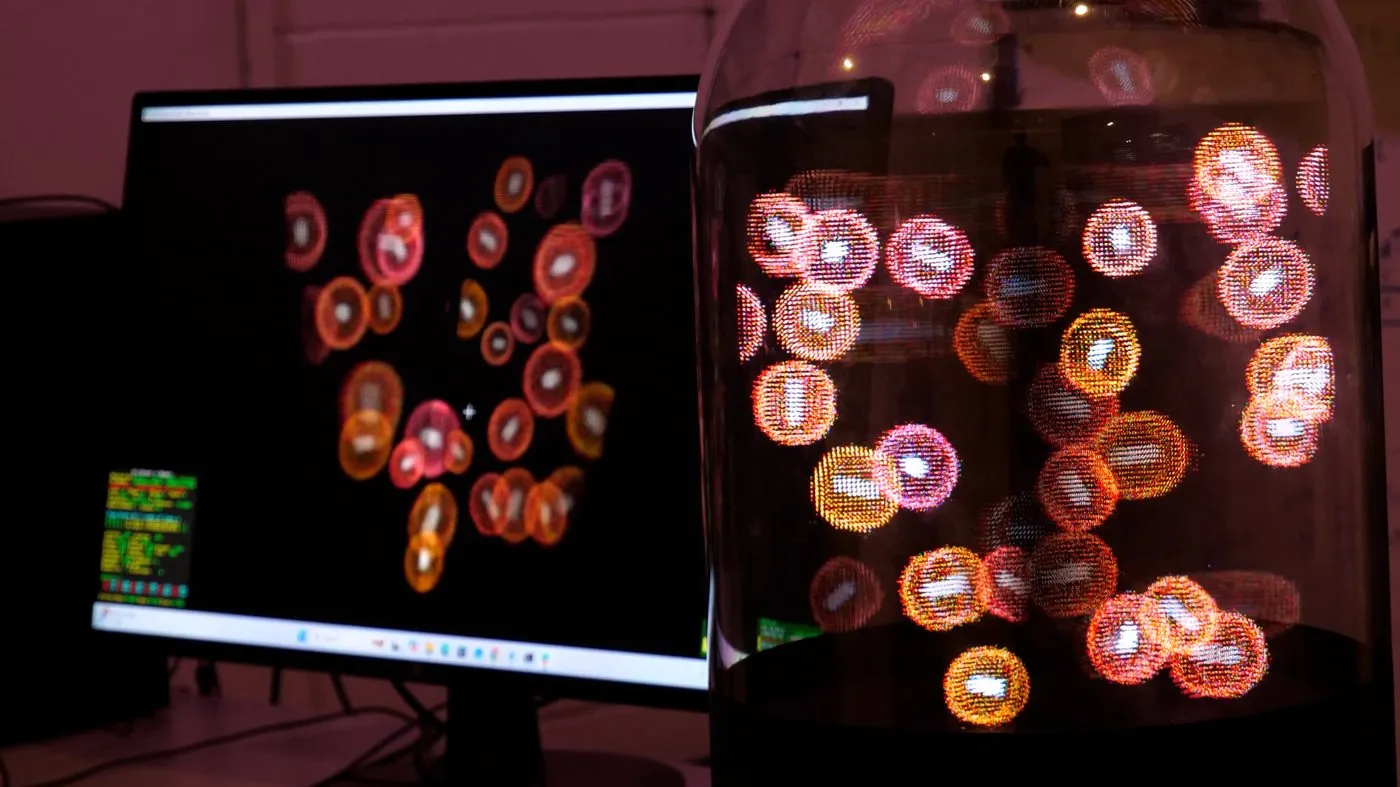
VoxelStudio, included with every display, plays the common 3D formats your team already uses: GLB, glTF, OBJ, FBX and STL, so most content is drag-and-drop.
For anything bespoke, the Voxel Photonics SDK (C, C++ and C#) lets you integrate your own formats and render your software directly to the display. Many open libraries for other 3D and scientific formats can be wired in the same way.
For applications that demand the highest visual fidelity and performance, we recommend Unreal Engine, whose real-time lighting and GPU-accelerated workflow pair naturally with the display.
Explore the VX2 and VX2-XL, try the live simulator, or talk to us about your use case.
We are also looking for creative companies to push volumetric further: manufacturing custom display configurations and building bespoke software integrations as a proof-of-concept project.