Turn any gallery into a destination with exhibits visitors can circle, study and remember.
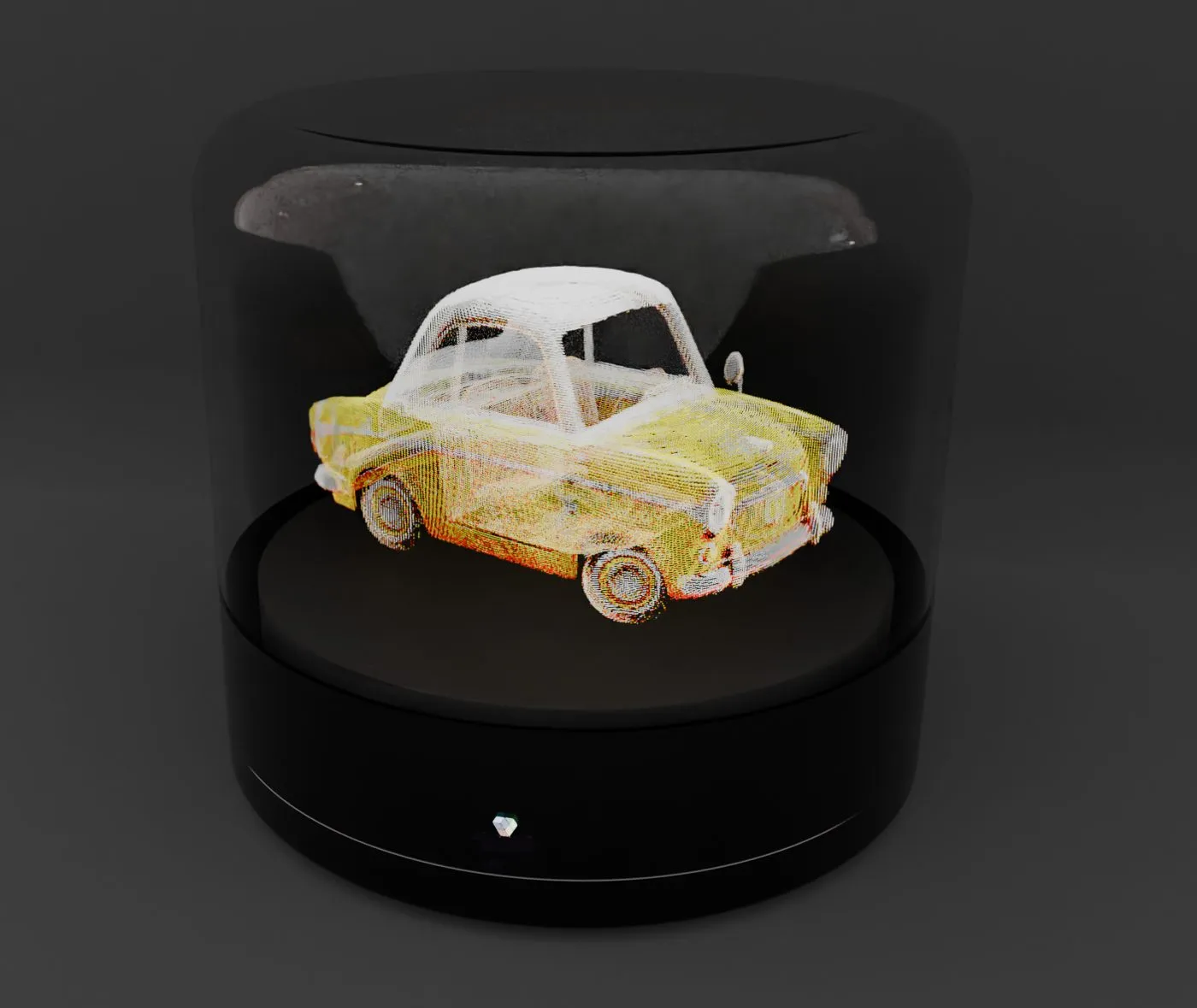
Museums compete for attention, and nothing draws a crowd like an object that seems to float in mid-air. A Voxel Photonics display shows artefacts, specimens and reconstructions as true three-dimensional images that every visitor sees from their own angle, with no glasses, no headsets and no queue for a single VR rig.
Most institutions can only put a tiny fraction of their collection on show at any one time; the rest stays in storage. Increasingly, those collections are being digitised using a range of techniques, from lidar to photogrammetry, and now, following in the footsteps of Egyptologists, CT scanning is being deployed to capture even the insides of artefacts, letting previously hidden secrets be explored in intricate detail. A volumetric display brings that hidden archive back into the gallery, letting visitors zoom, rotate and study an artefact in intricate detail, right down to features the naked eye would miss.
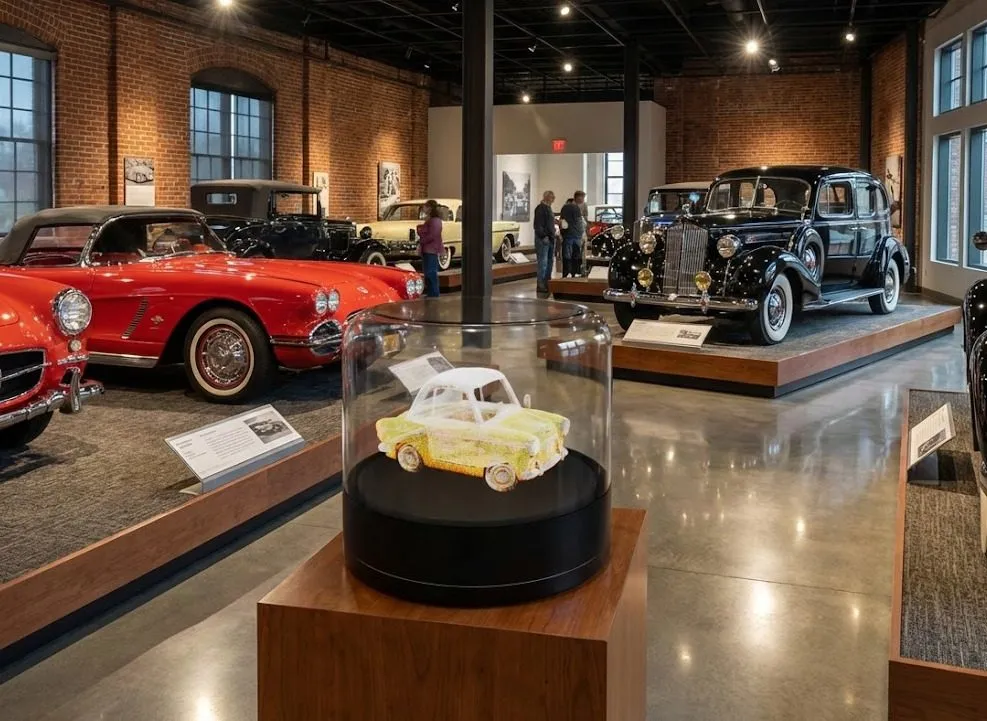
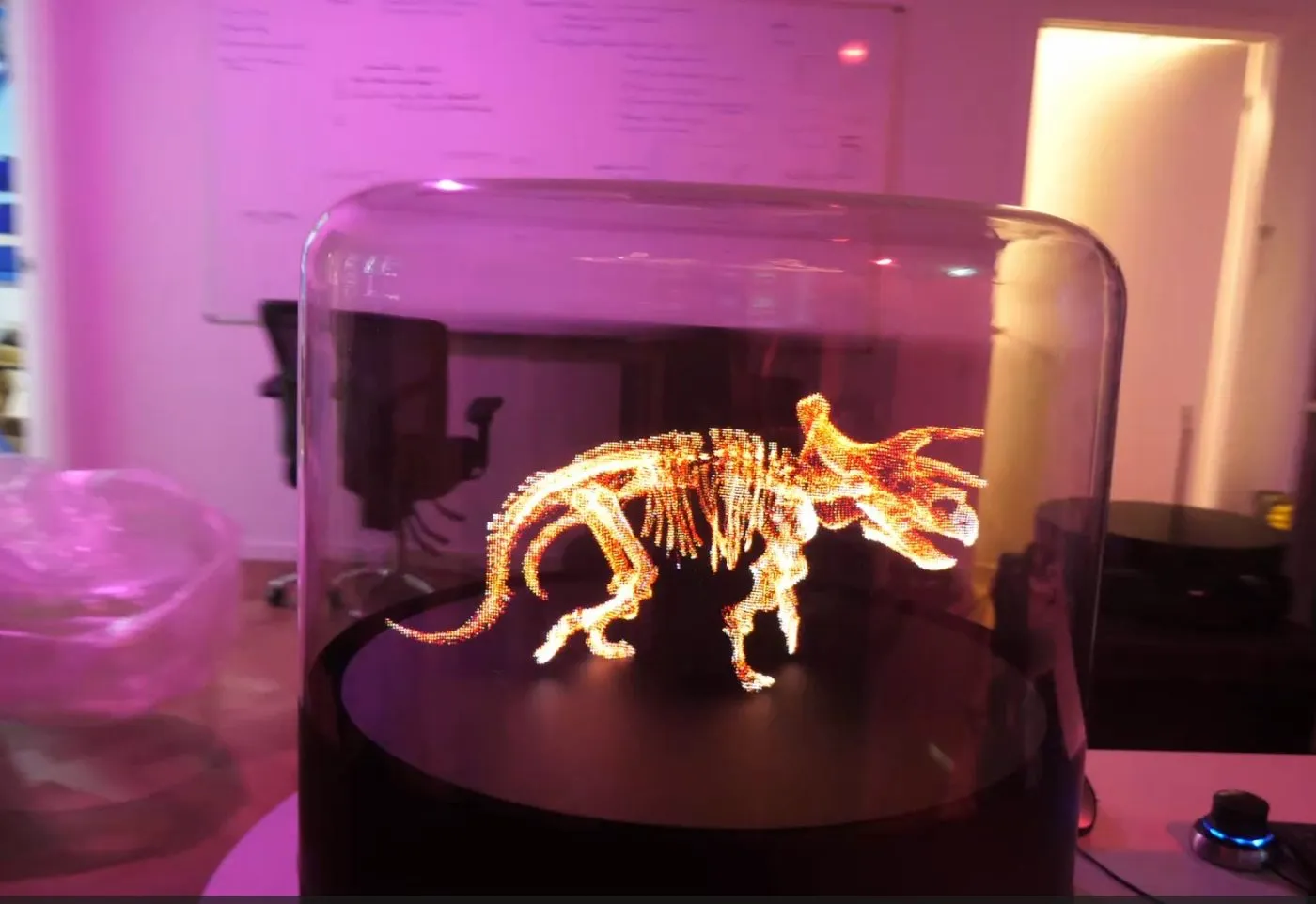
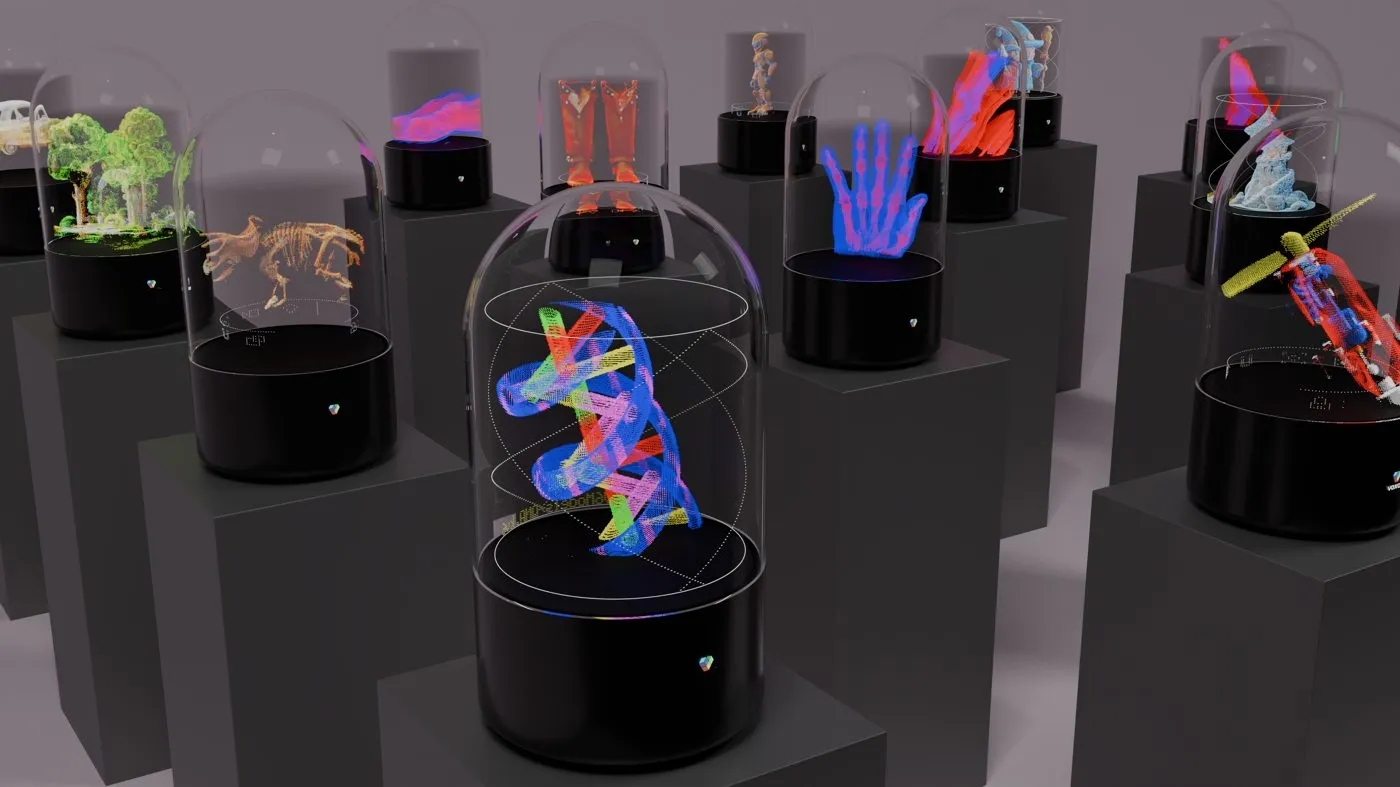
It also lets fragile or inaccessible objects be shown at full volume without risk. A dinosaur skull, a vintage car, an archaeological site or a lost building can be rotated, scaled and explored while the original stays safely behind glass. Because the image is real light in real space, school groups and gallery-goers gather around the same exhibit and discuss what they see together.
Updating content is as simple as loading a new model, so one display can carry a rotating programme of exhibitions, sponsorships and seasonal stories, keeping the experience fresh and giving curators a genuinely new medium for storytelling.
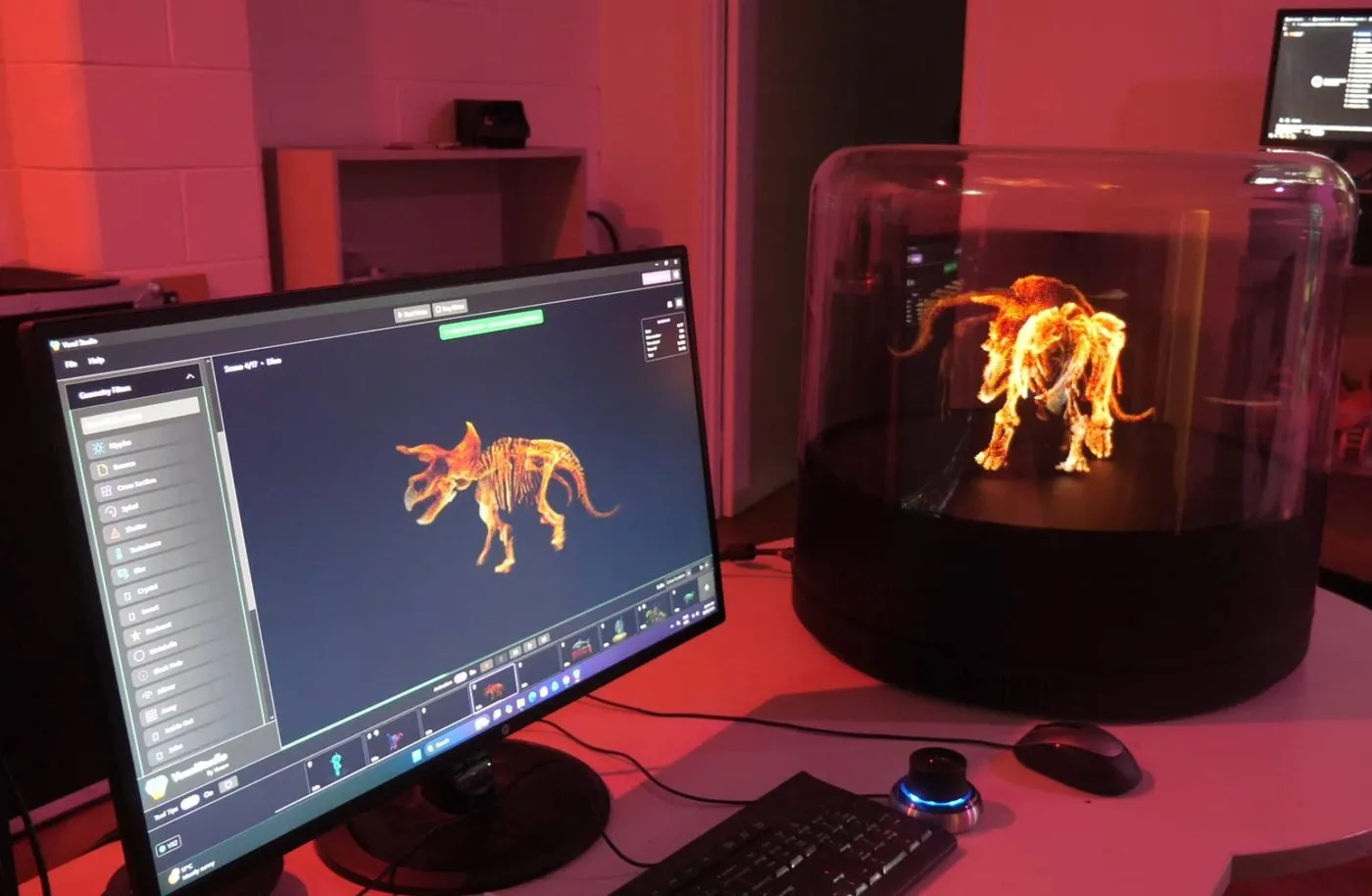
VoxelStudio, included with every display, plays the common 3D formats your team already uses: GLB, glTF, OBJ, FBX and STL, so most content is drag-and-drop.
For anything bespoke, the Voxel Photonics SDK (C, C++ and C#) lets you integrate your own formats and render your software directly to the display. Many open libraries for other 3D and scientific formats can be wired in the same way.
For applications that demand the highest visual fidelity and performance, we recommend Unreal Engine, whose real-time lighting and GPU-accelerated workflow pair naturally with the display.
Explore the VX2 and VX2-XL, try the live simulator, or talk to us about your use case.
We are also looking for creative companies to push volumetric further: manufacturing custom display configurations and building bespoke software integrations as a proof-of-concept project.