Bring scans, anatomy and surgical plans into real space, for clinicians, students and patients alike.
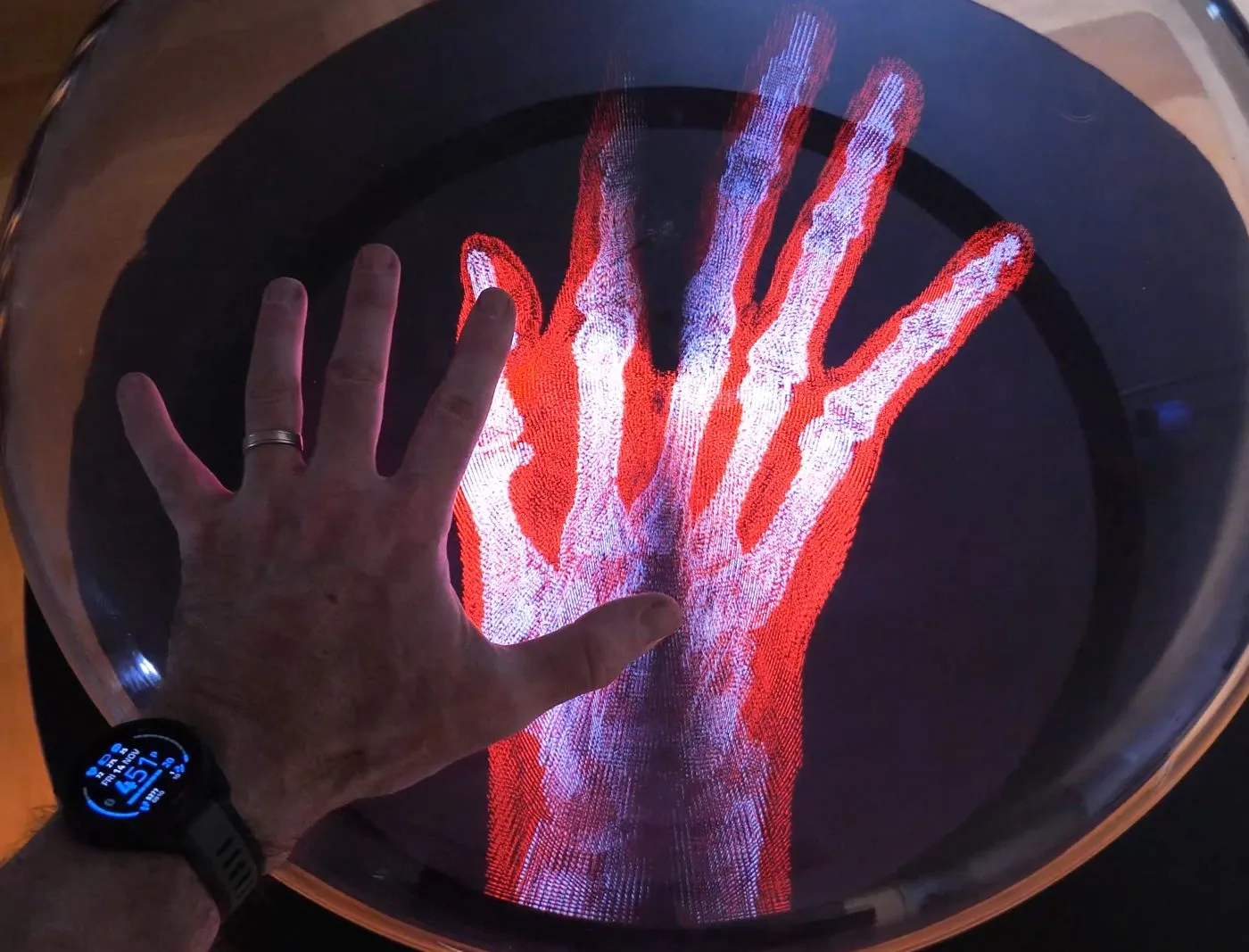
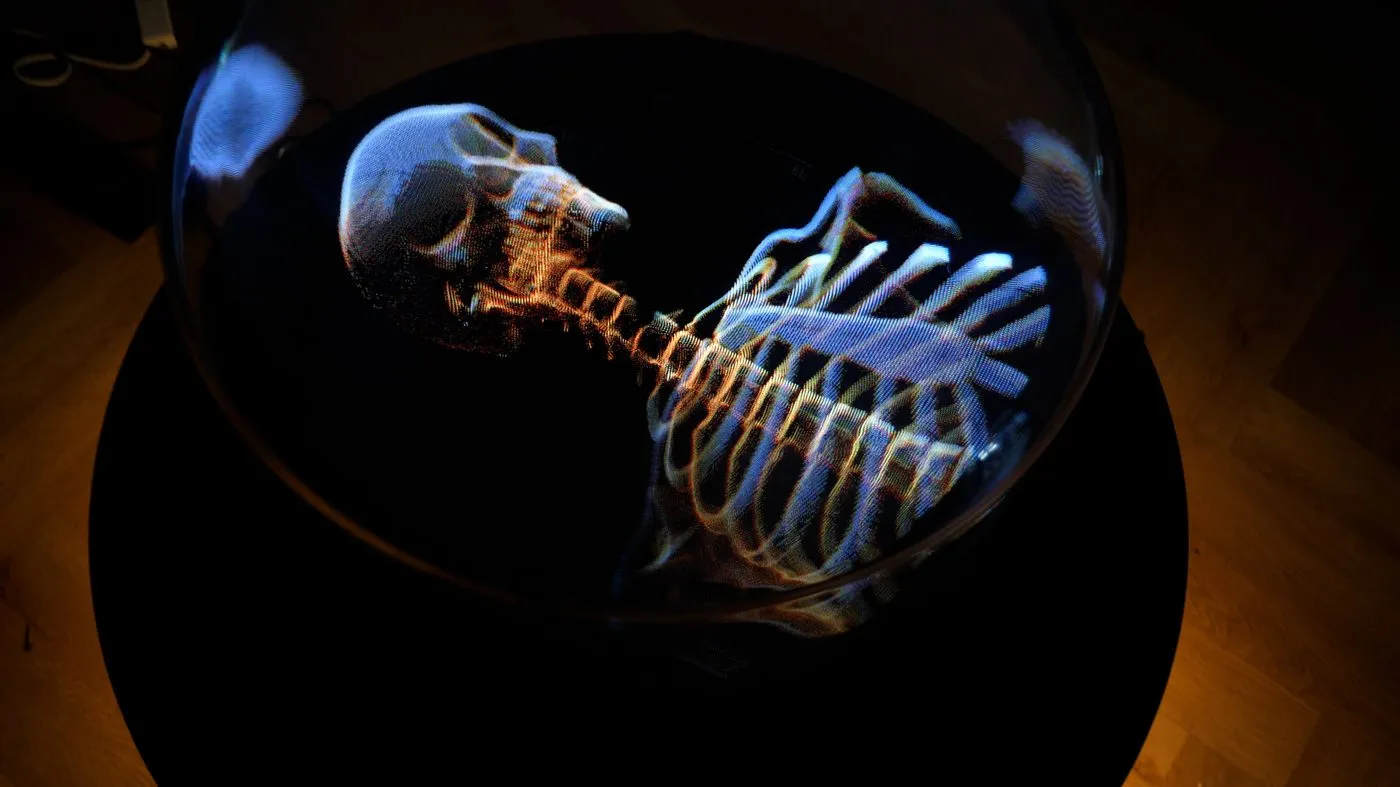
Medical imaging is volumetric by nature, yet clinicians routinely reconstruct 3D anatomy in their heads from stacks of 2D slices. A Voxel Photonics display presents that anatomy as a true three-dimensional object, viewable from any angle without glasses. With native DICOM support, CT data can be viewed directly in the volume.
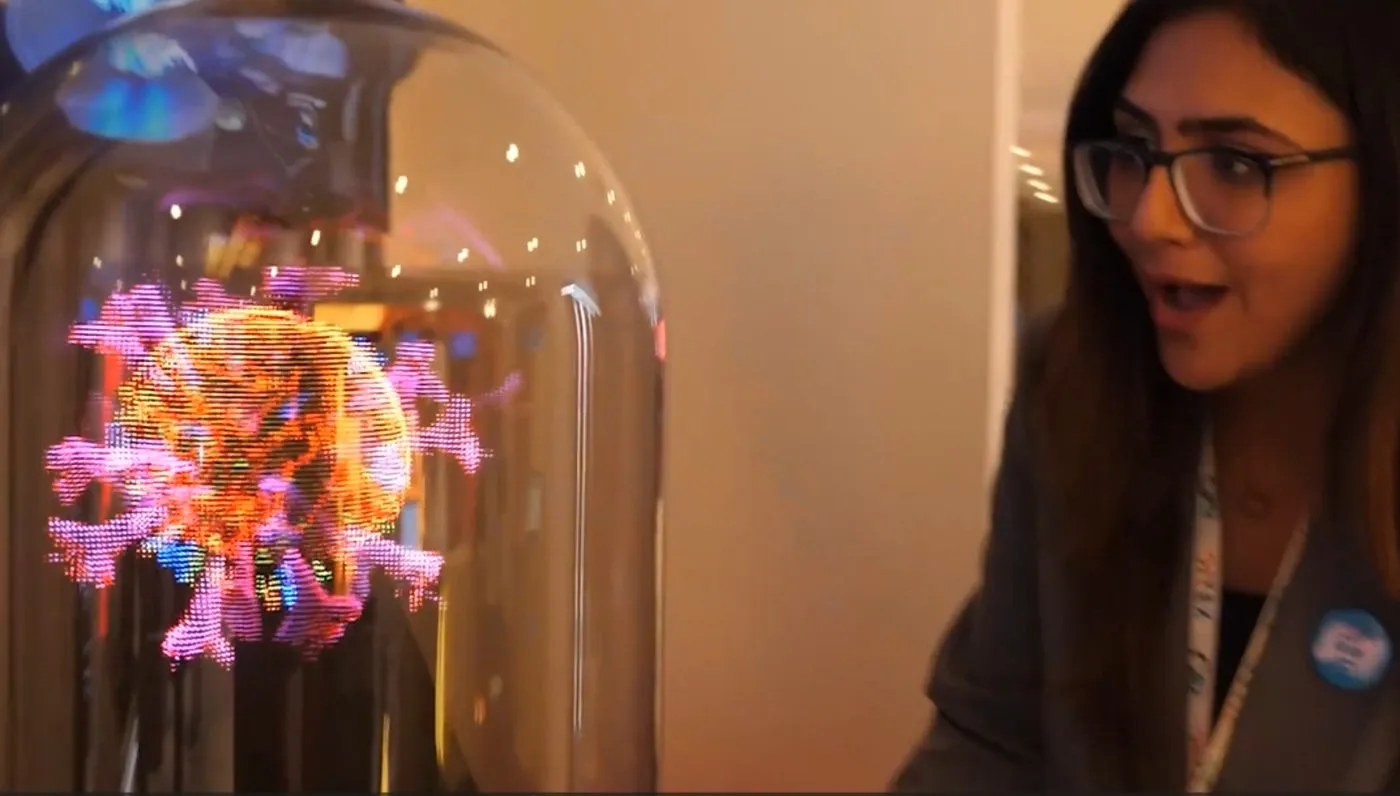
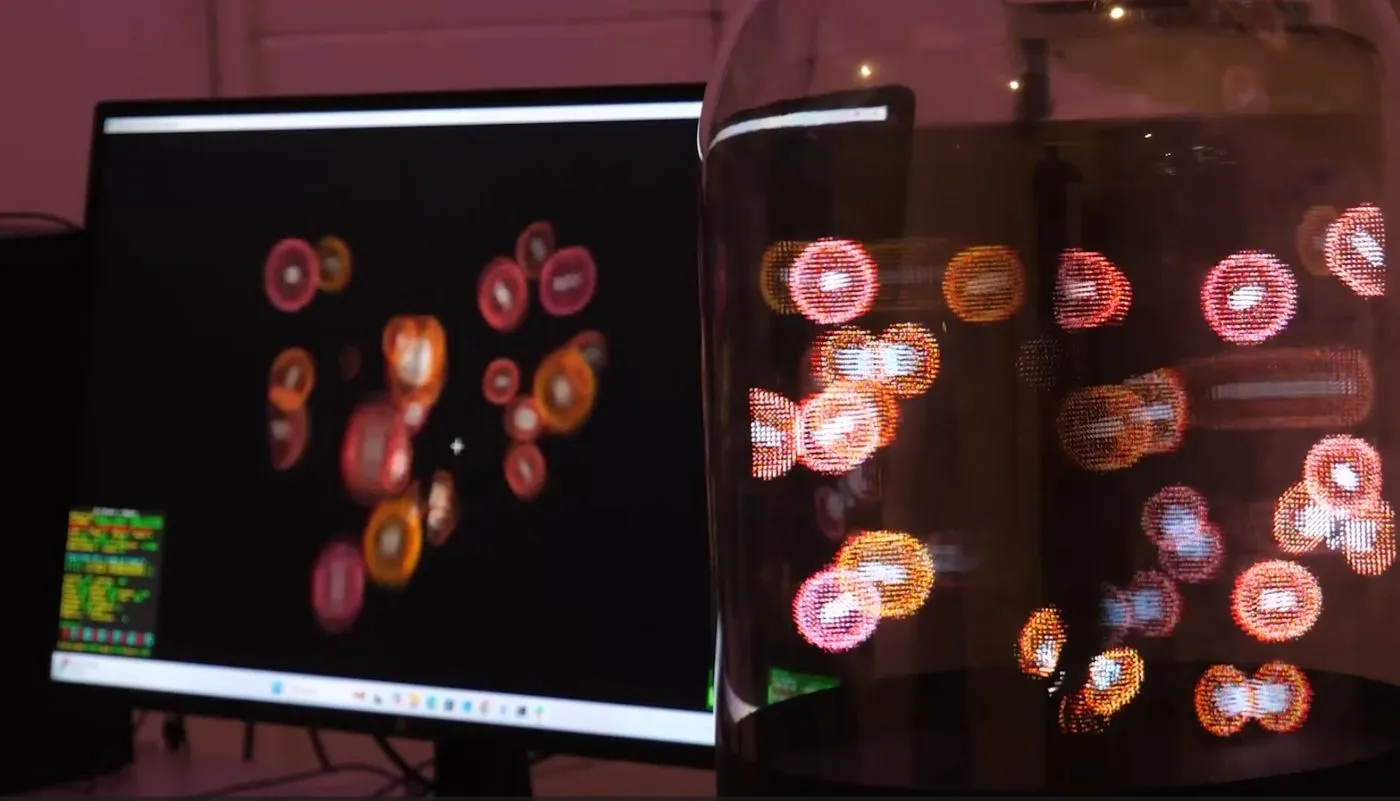
For teaching, students gather around a heart, a skull or a cellular structure and explore it together, which is far more intuitive than a textbook or a flat render. For surgical planning, teams study patient-specific structures spatially before they operate.
Perhaps most valuable is patient communication: explaining a condition or procedure is dramatically clearer when the patient can see the anatomy floating in front of them. Content is built from standard formats and clinical DICOM data, and shown on a compact display that fits in a classroom, clinic or theatre anteroom.
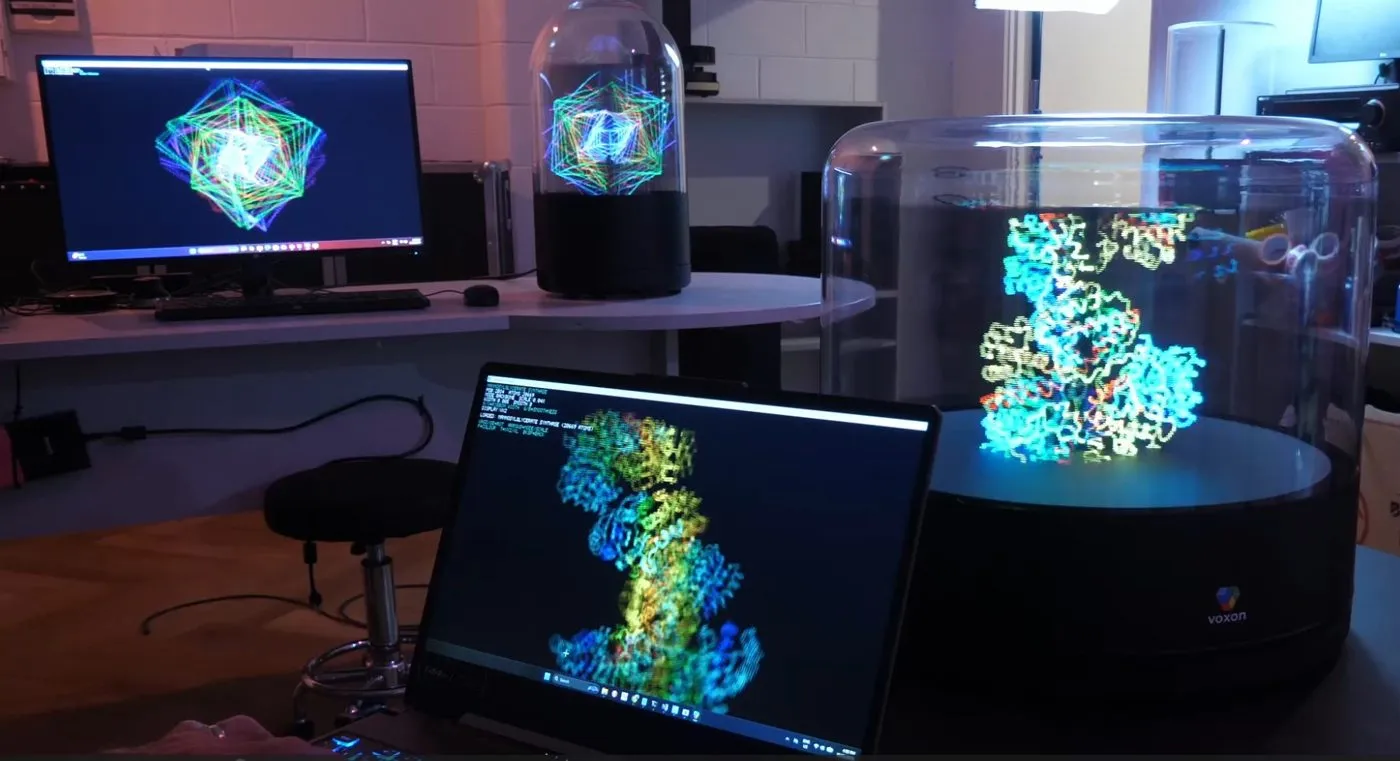
And you do not have to start from scratch. The Voxel Photonics SDK (C, C++ and C#) lets developers add volumetric rendering to existing clinical software, so output from CT, MRI and other 3D scanning modalities can be piped straight into the display without changing the tools teams already rely on.
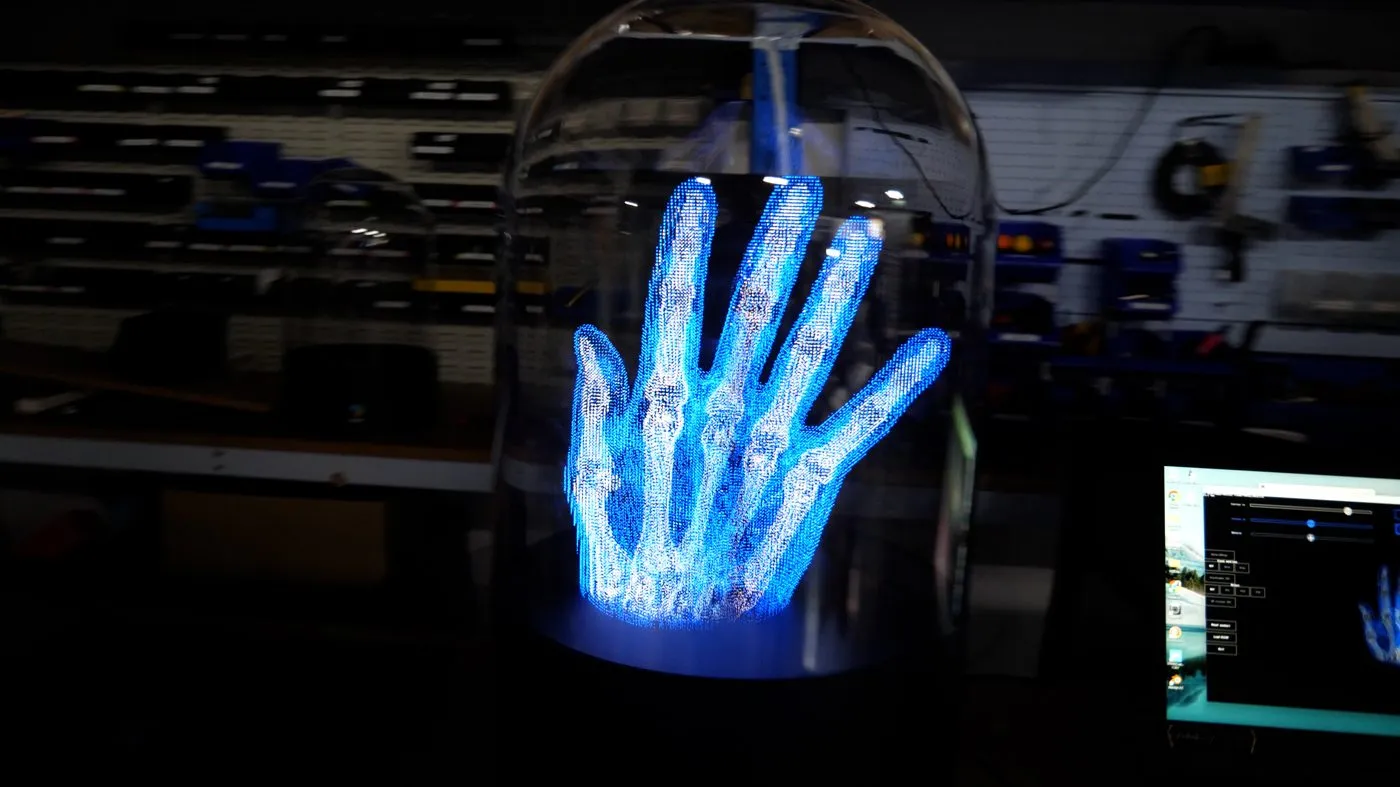
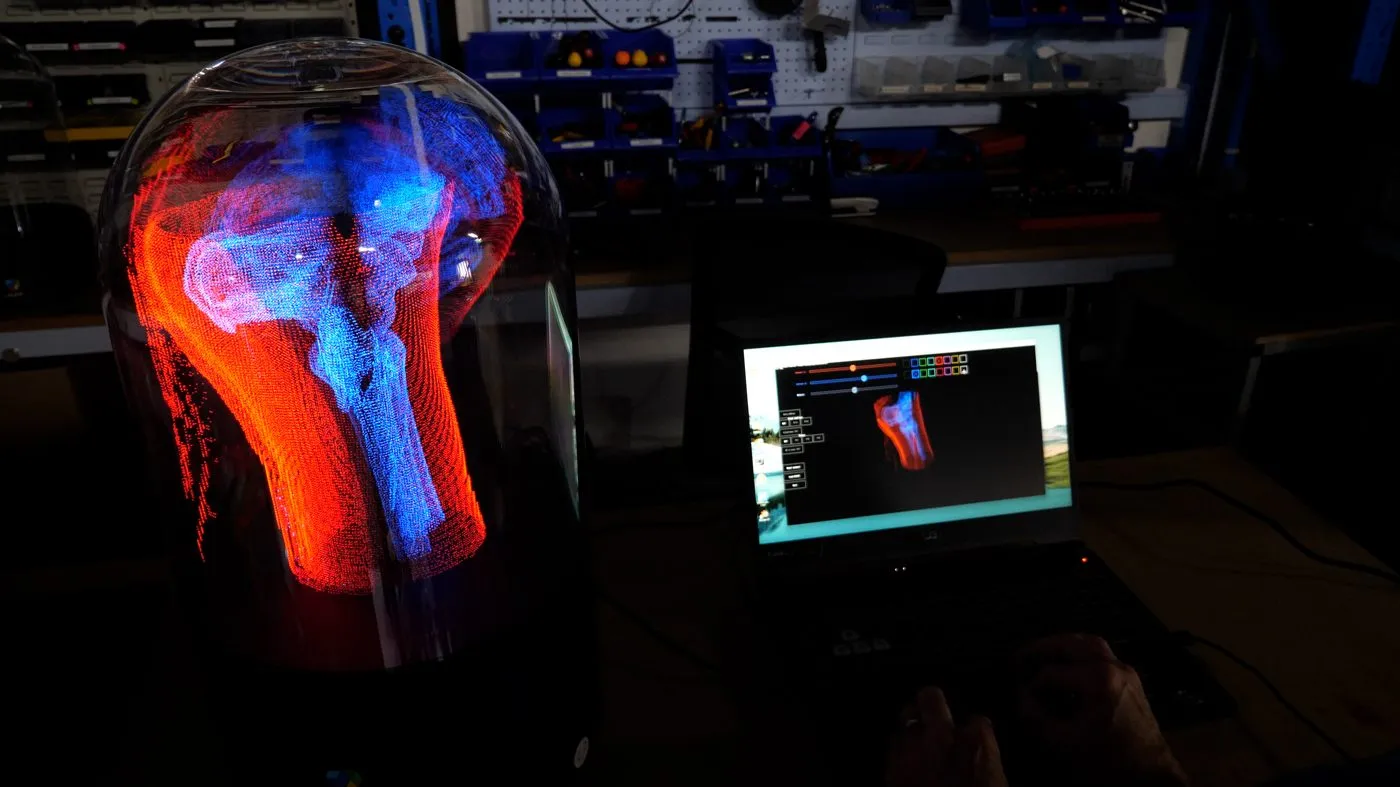
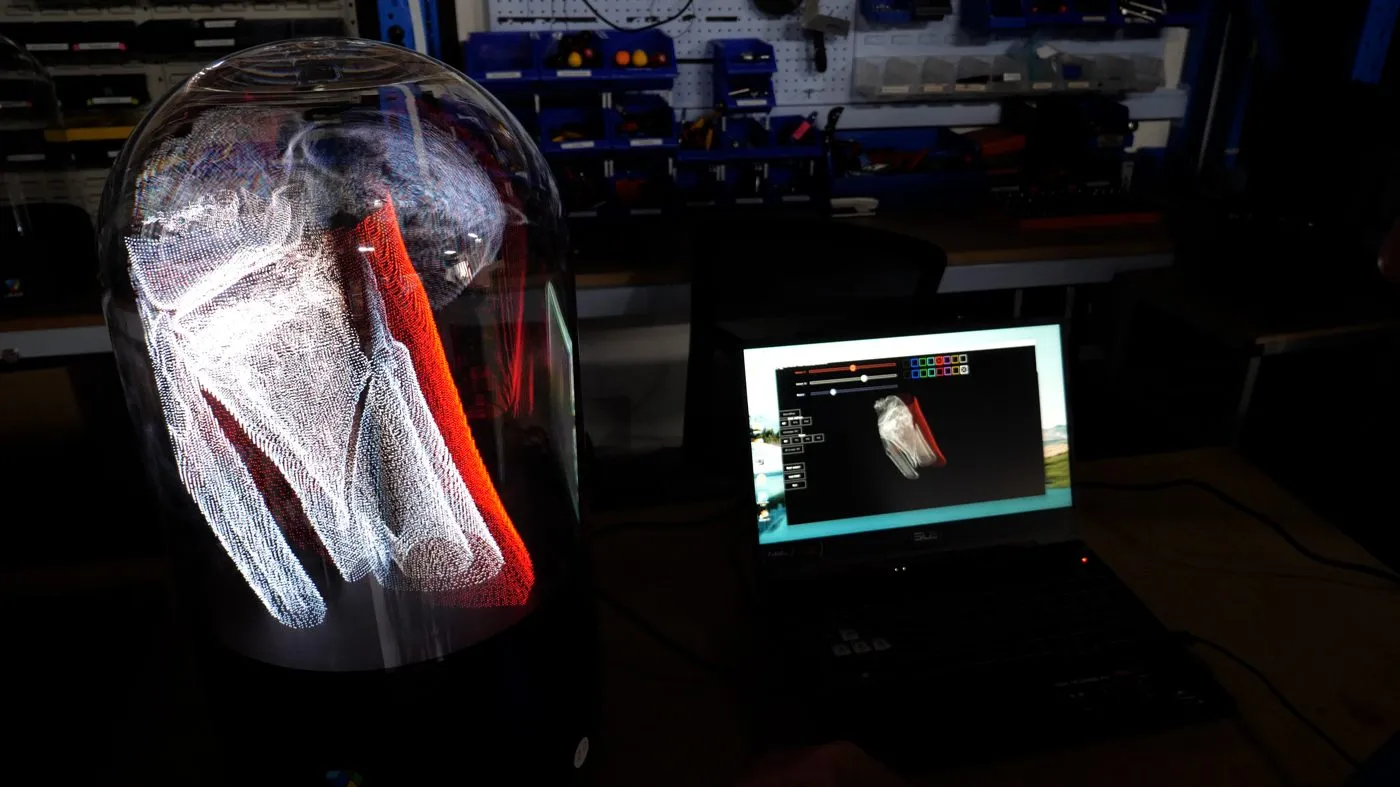
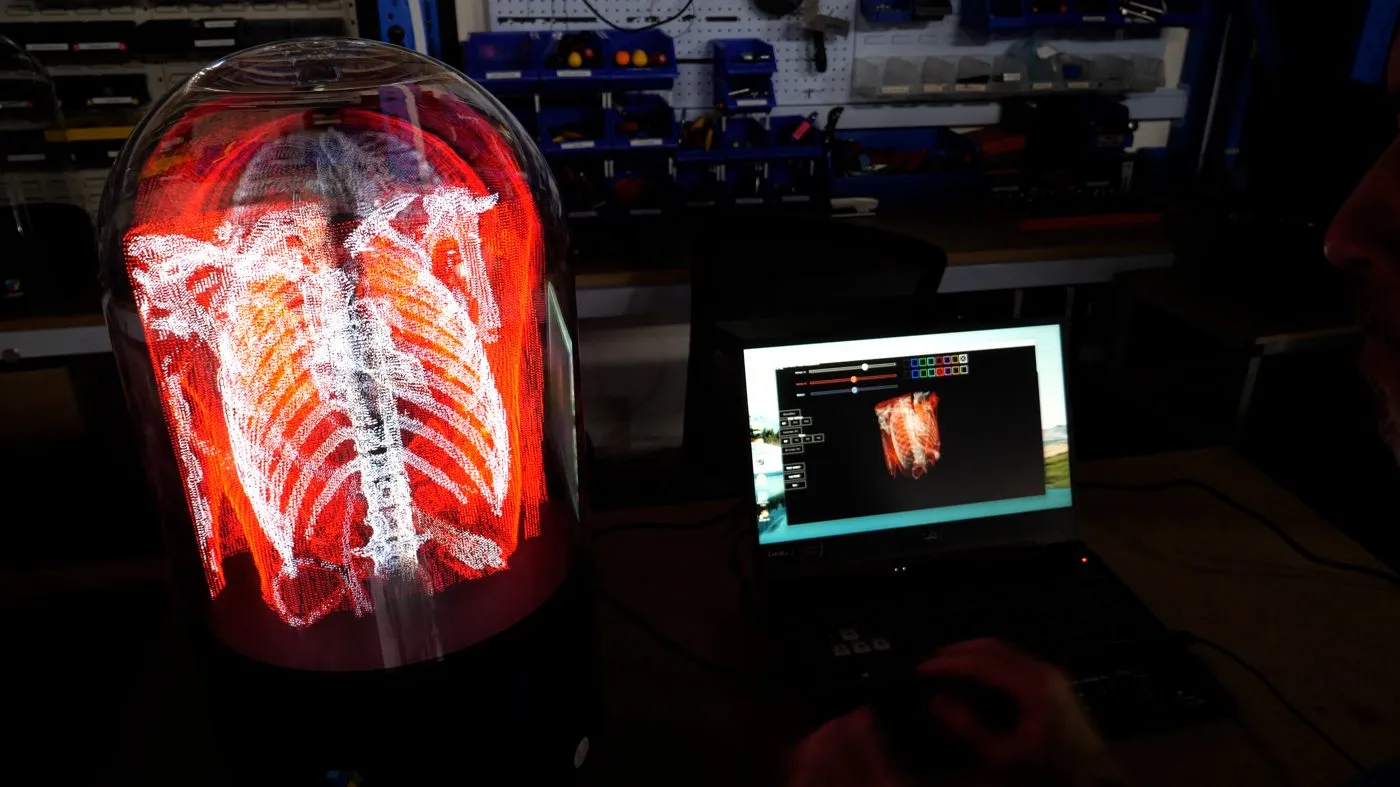
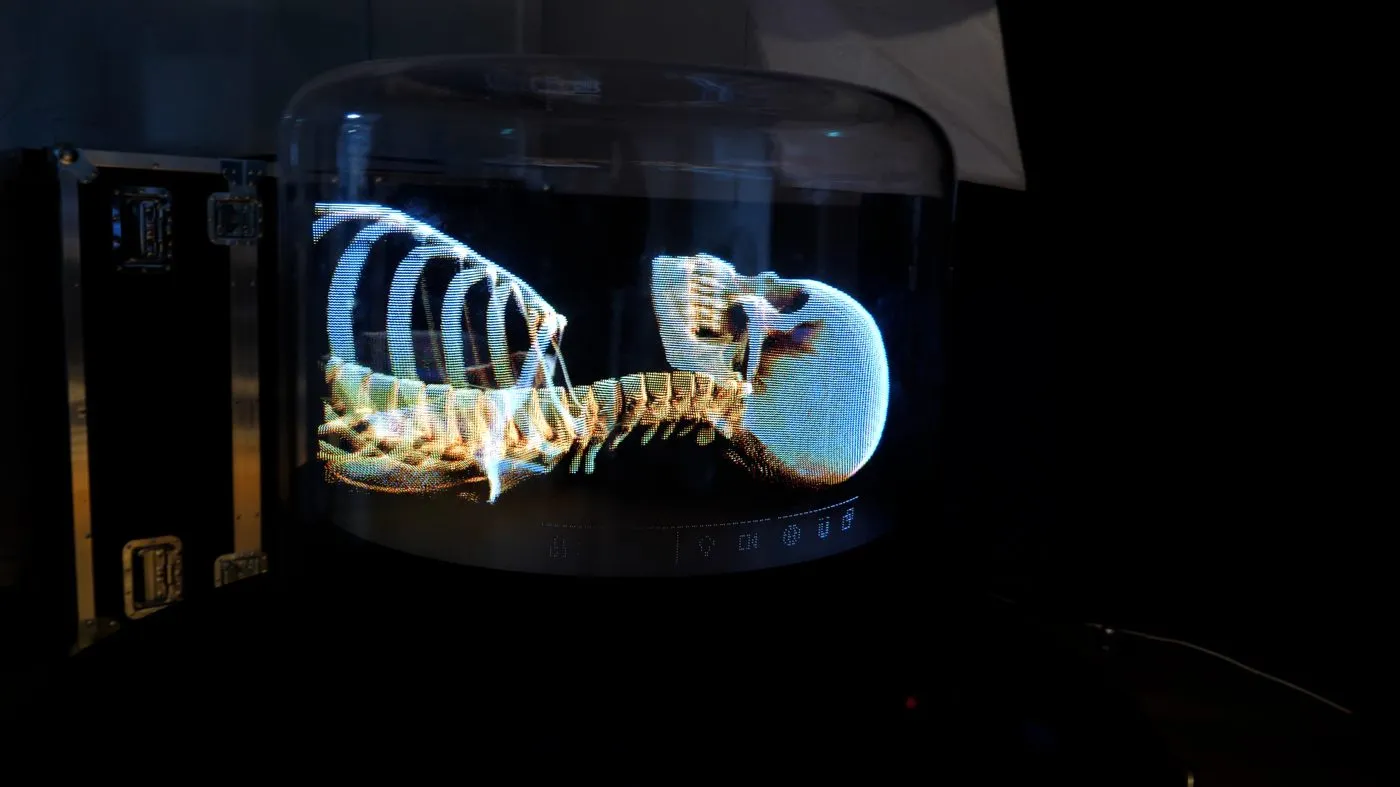
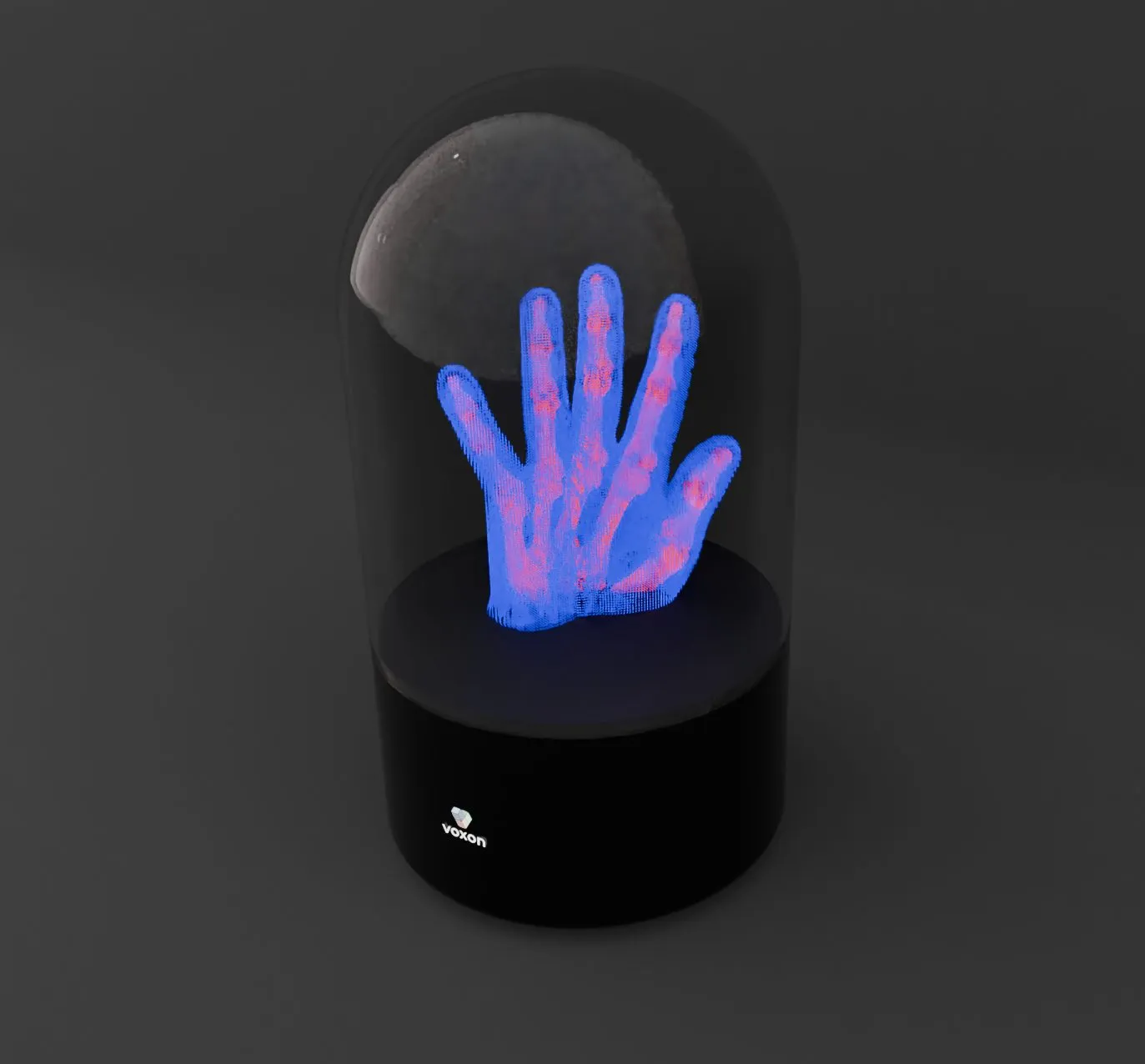
VoxelStudio, included with every display, plays the common 3D formats your team already uses: GLB, glTF, OBJ, FBX and STL, so most content is drag-and-drop. CT scans are supported natively via DICOM, with no conversion step.
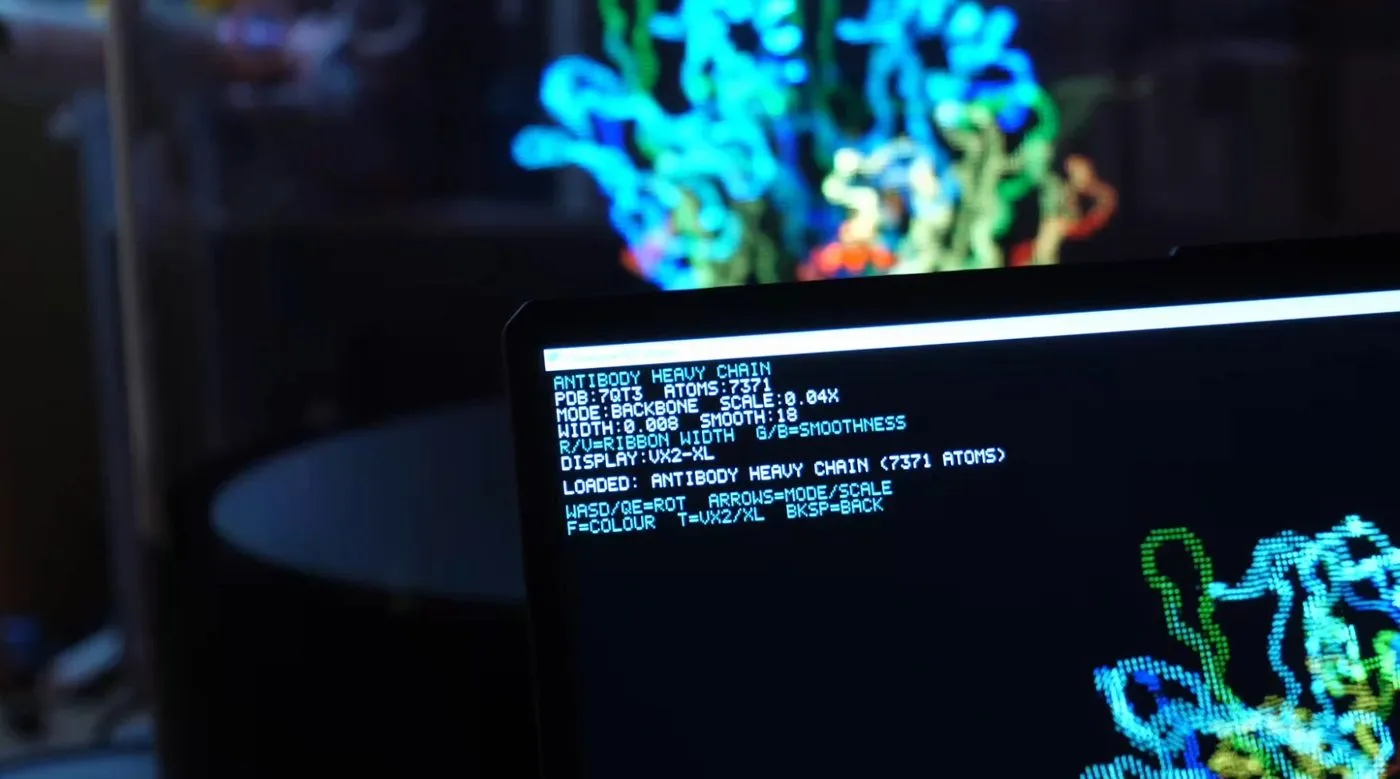
For anything bespoke, the Voxel Photonics SDK (C, C++ and C#) lets you integrate your own formats and render your software directly to the display. Many open libraries for other 3D and scientific formats can be wired in the same way.
For applications that demand the highest visual fidelity and performance, we recommend Unreal Engine, whose real-time lighting and GPU-accelerated workflow pair naturally with the display.
Explore the VX2 and VX2-XL, try the live simulator, or talk to us about your use case.
We are also looking for creative companies to push volumetric further: manufacturing custom display configurations and building bespoke software integrations as a proof-of-concept project.