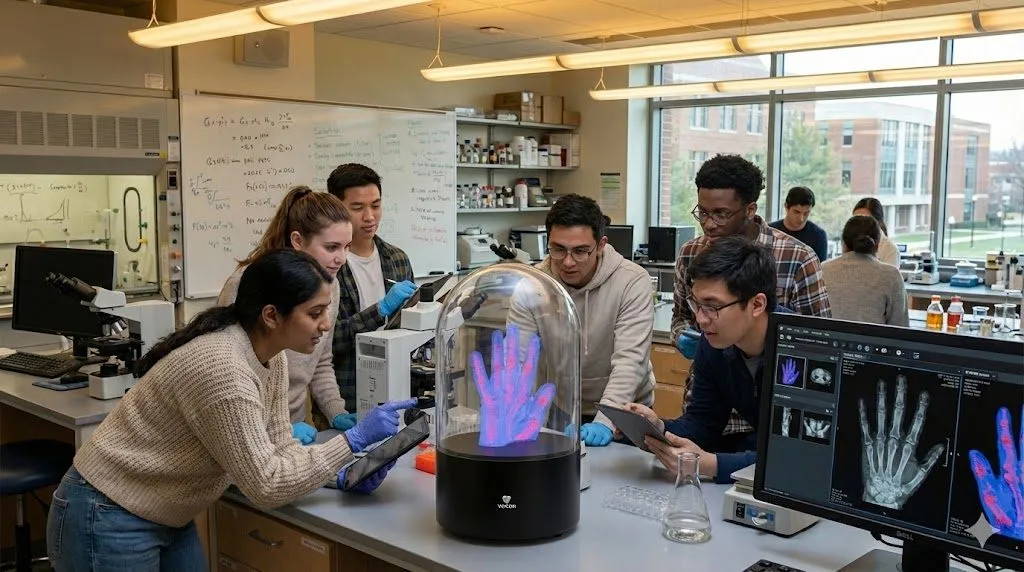
Hands-on, gather-round learning for the concepts that are hardest to picture.
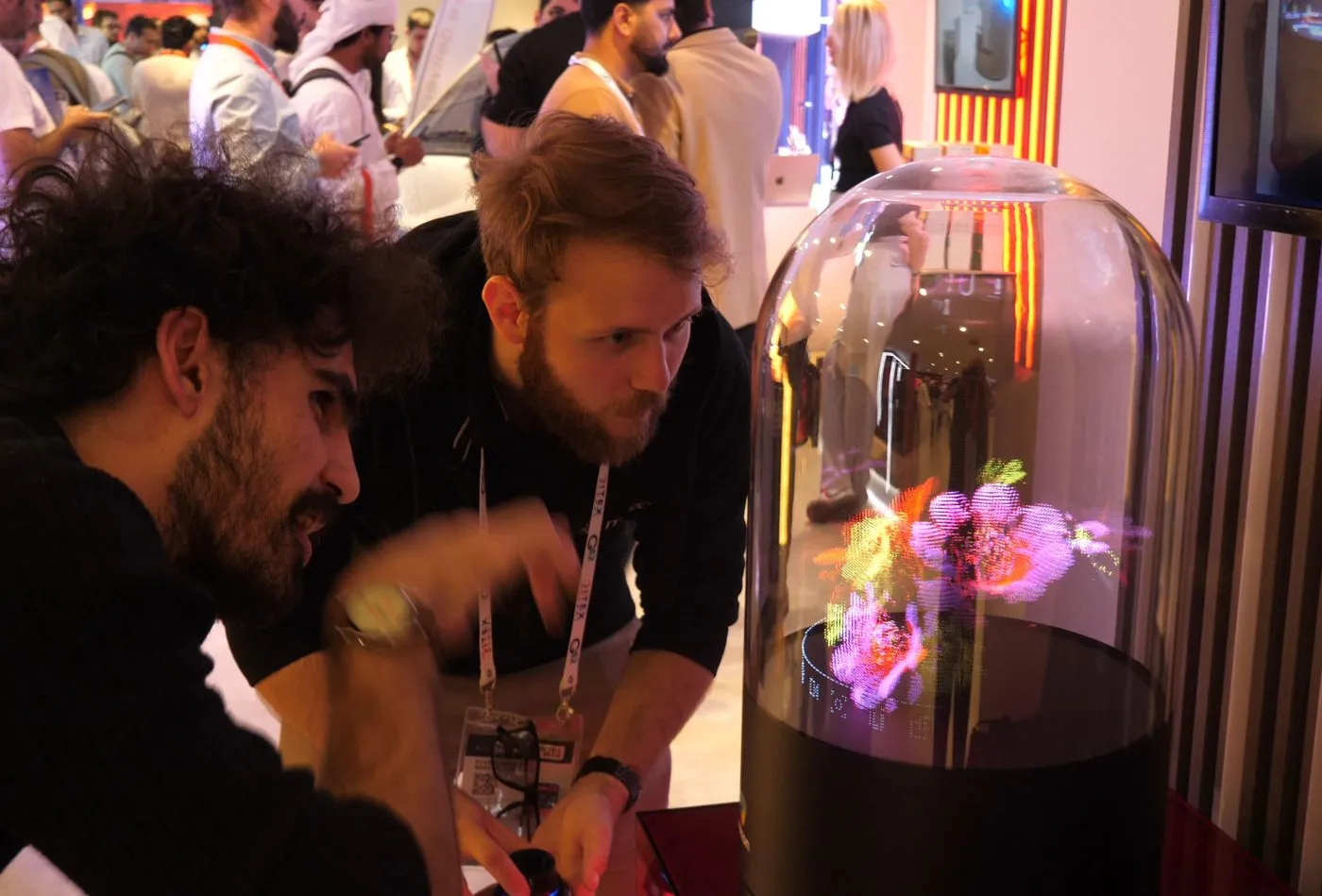
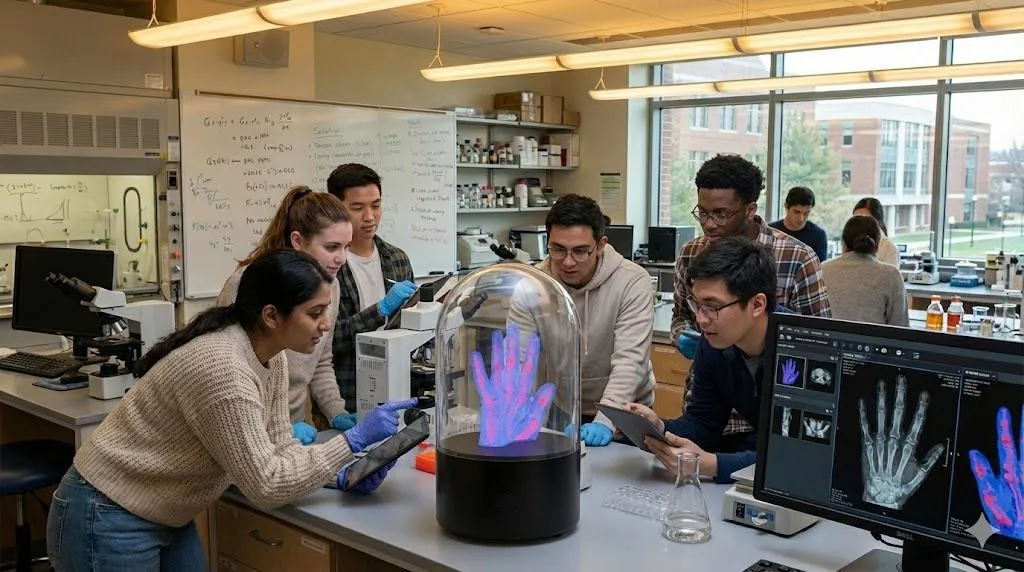
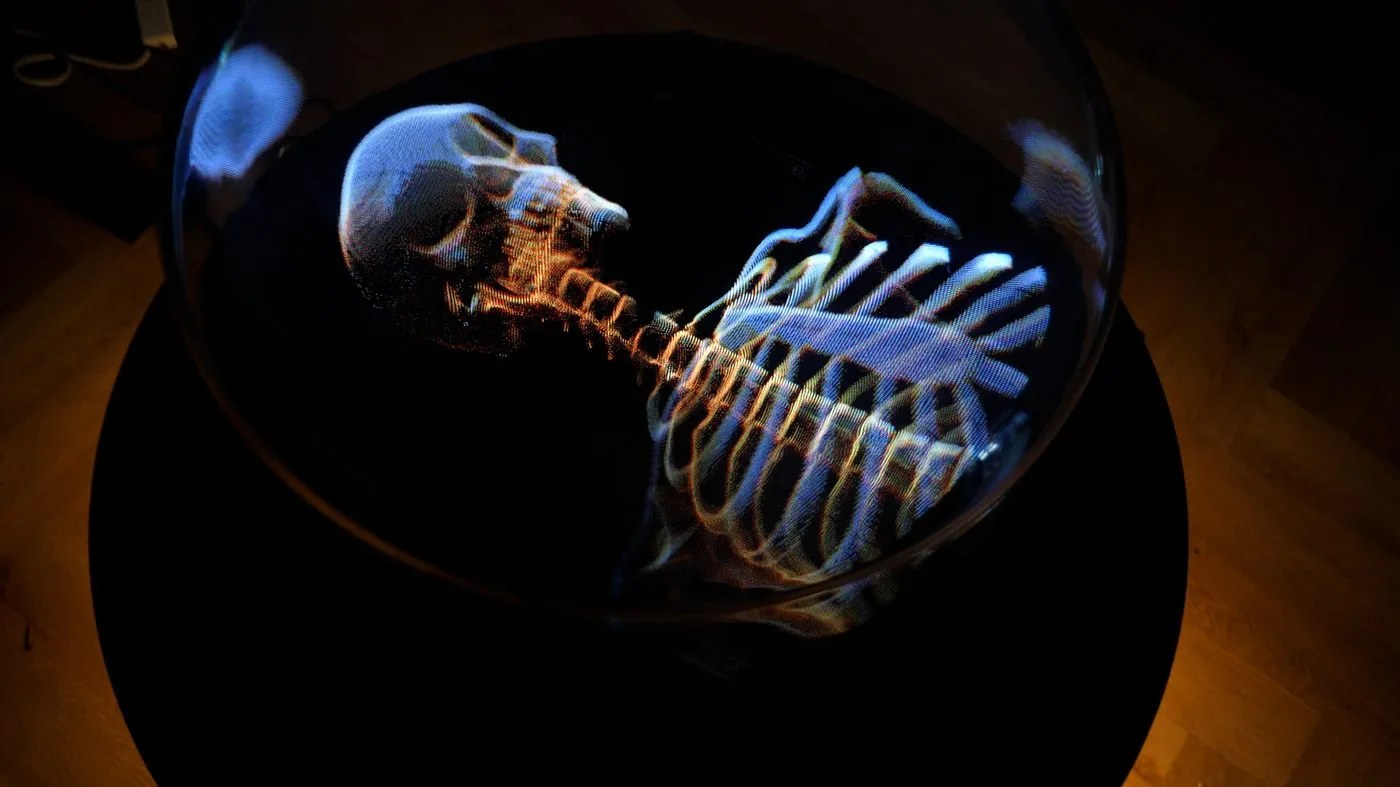
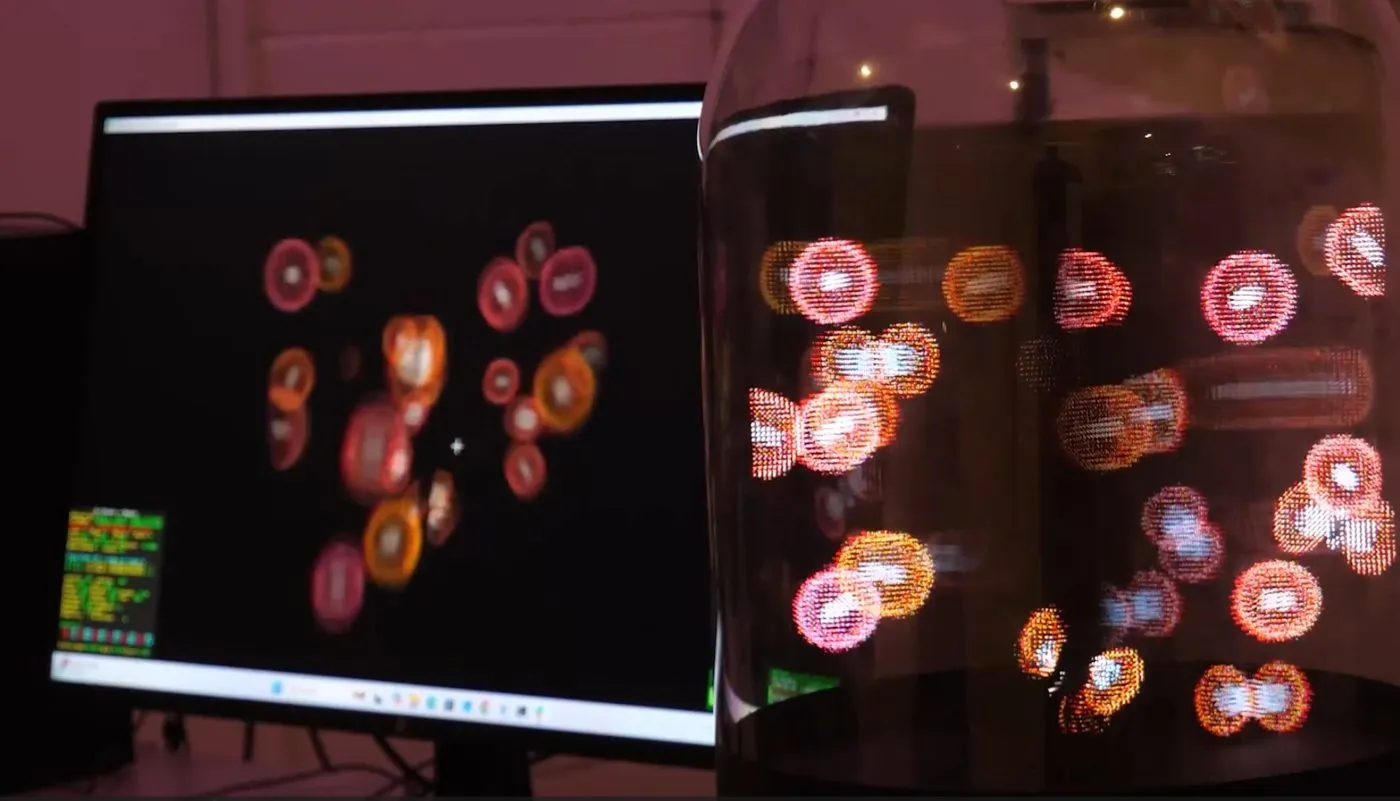
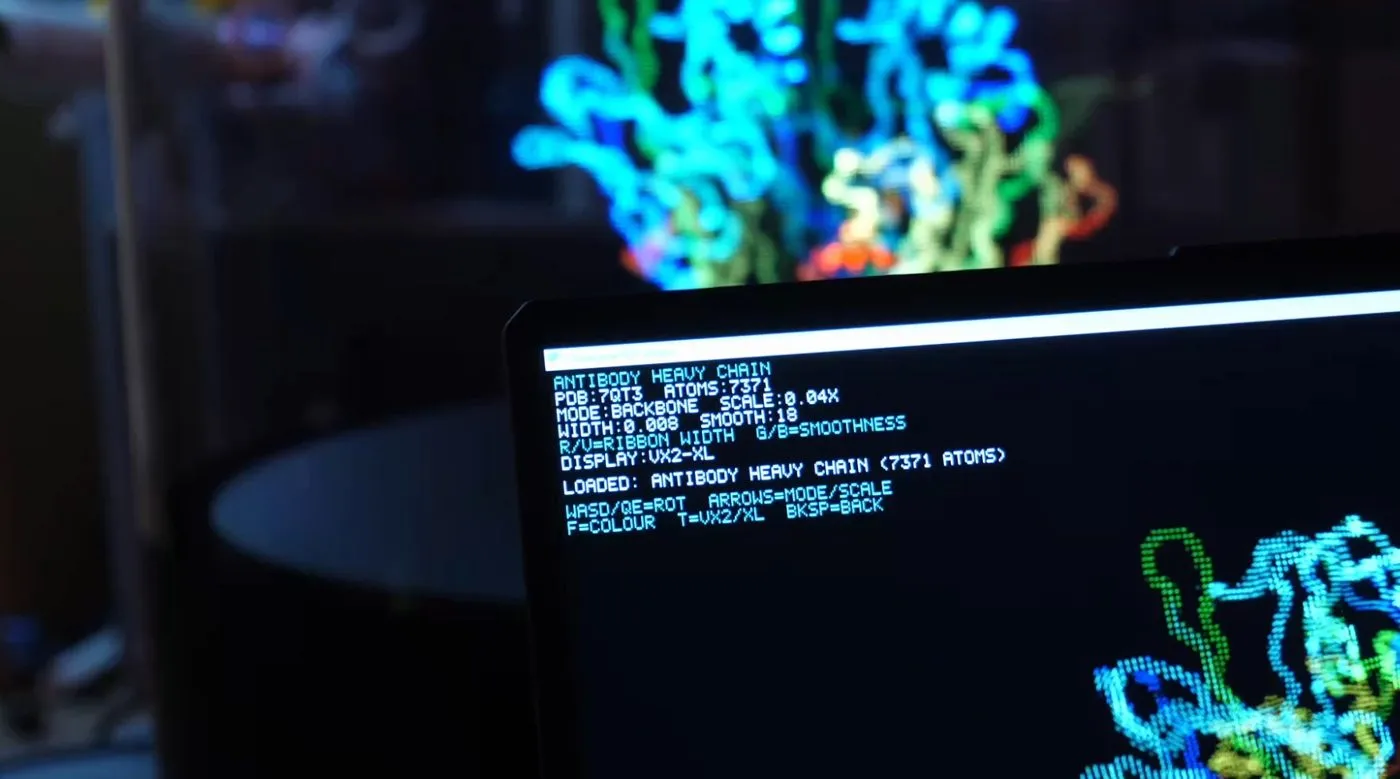
So much of what students learn is three-dimensional, from molecules and proteins to cells, geometry, engineering parts and anatomy, but it is taught with flat diagrams and screens. A Voxel Photonics display lets a class gather around the real shape of an idea and explore it together, with no headsets required.
It is also a powerful, motivating way to teach digital creation. Students learn programming and 3D design and then watch their own work appear in the volume, an immediate, tangible reward that makes abstract skills feel real. Designs can be shared and compared, and digital museum and science assets explored as if the objects were on the desk.
Because the display is compact, glasses-free and driven from an ordinary PC with standard 3D formats and a full SDK, it fits naturally into classrooms, makerspaces and lecture theatres, and grows with students from first experiments to advanced projects.
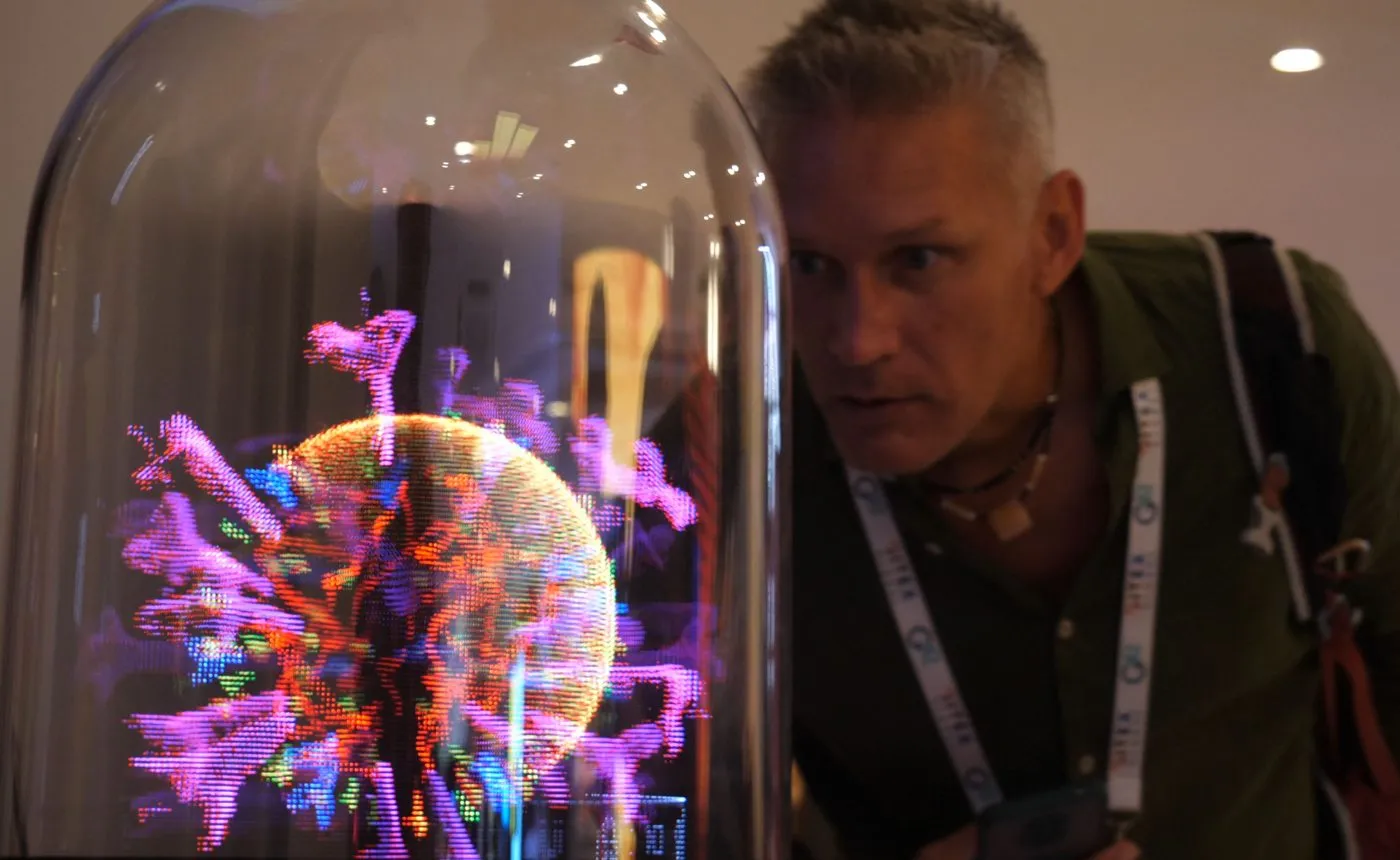
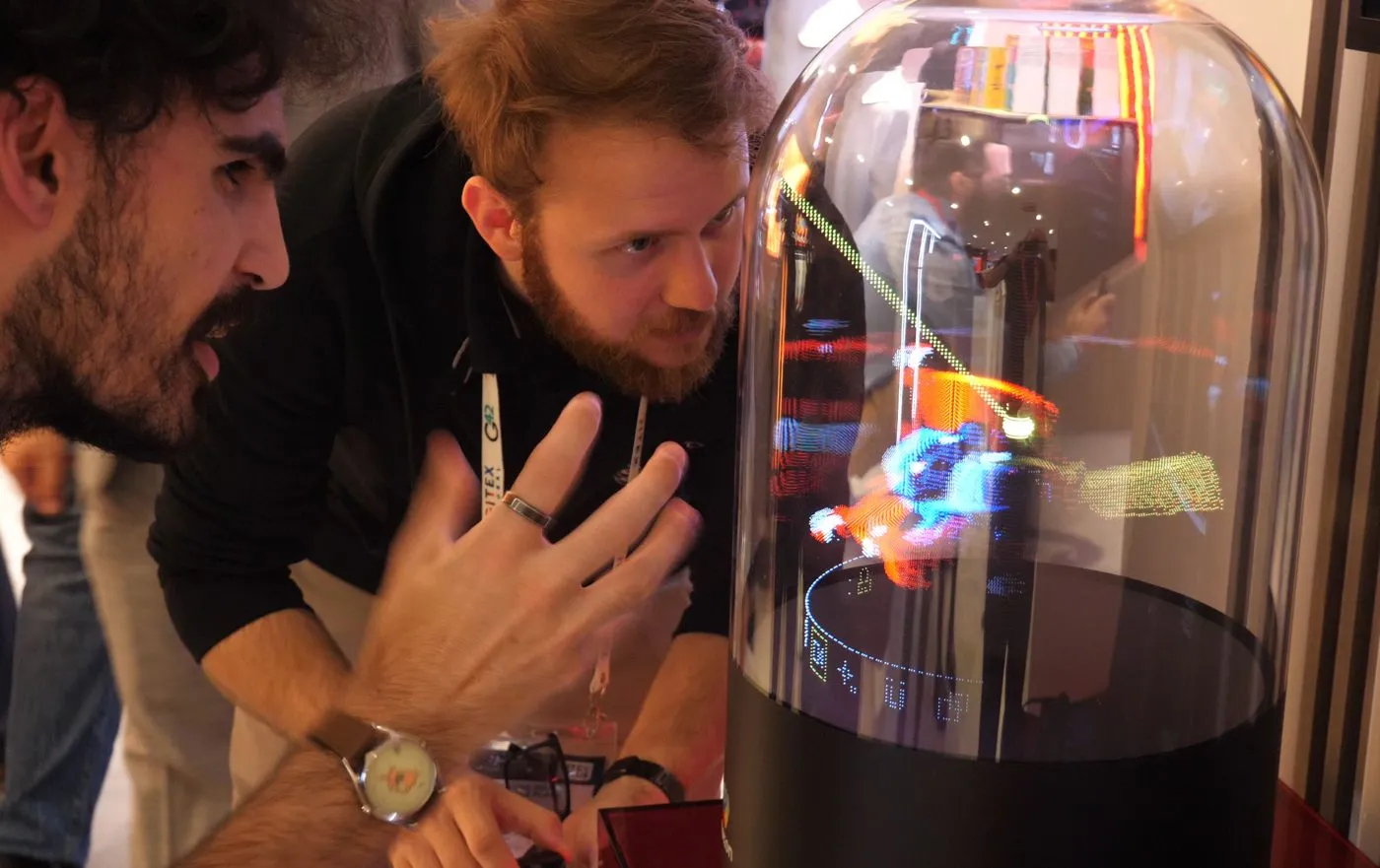
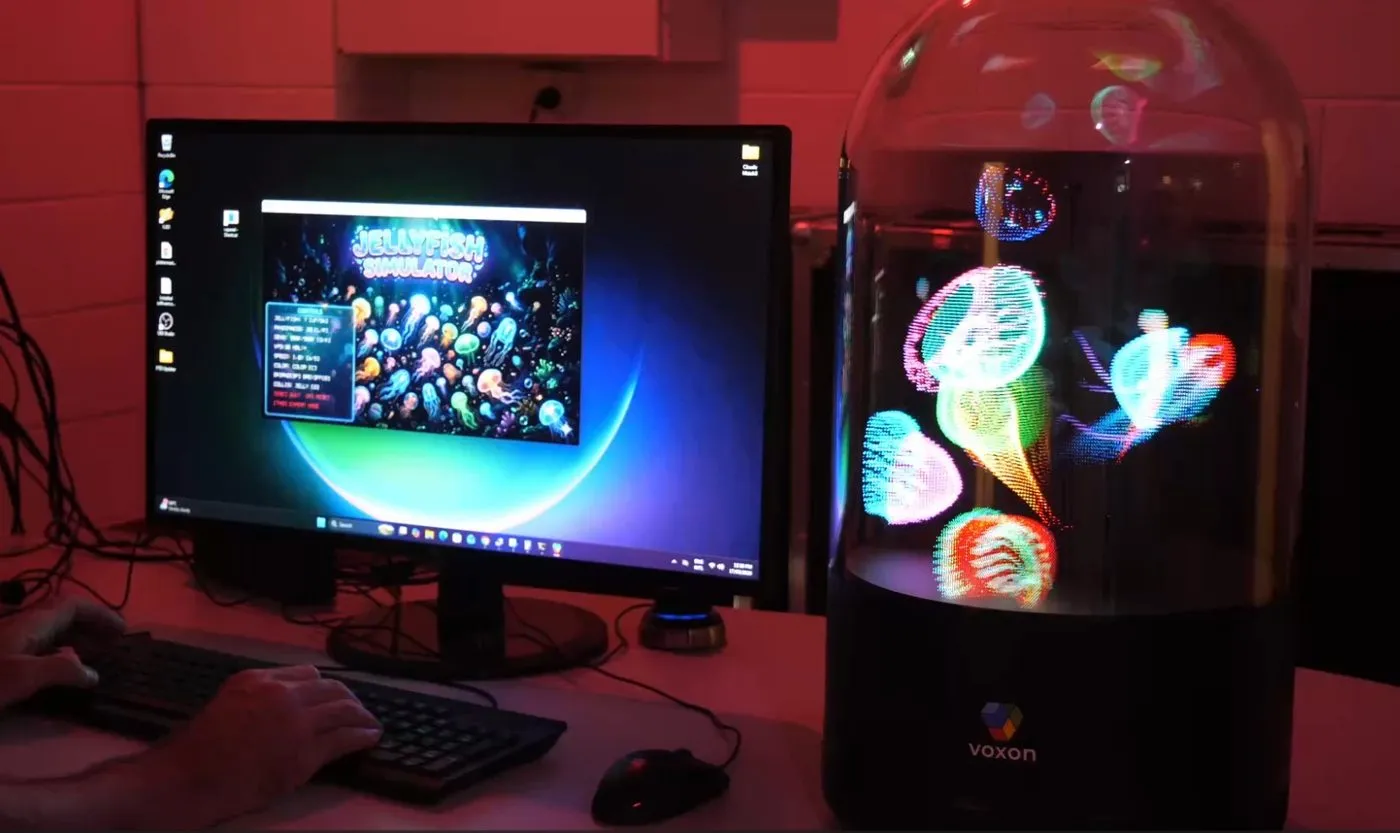
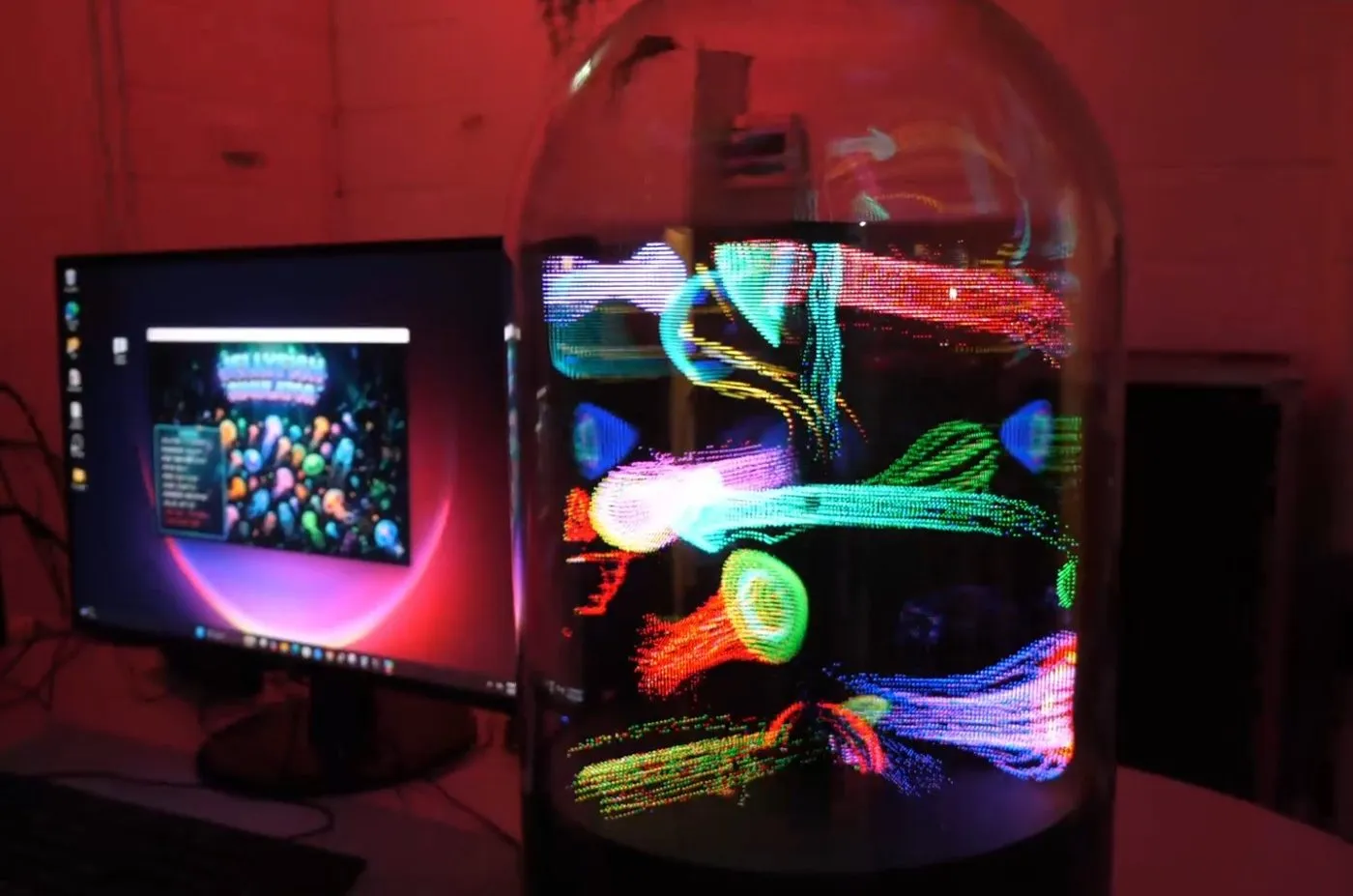
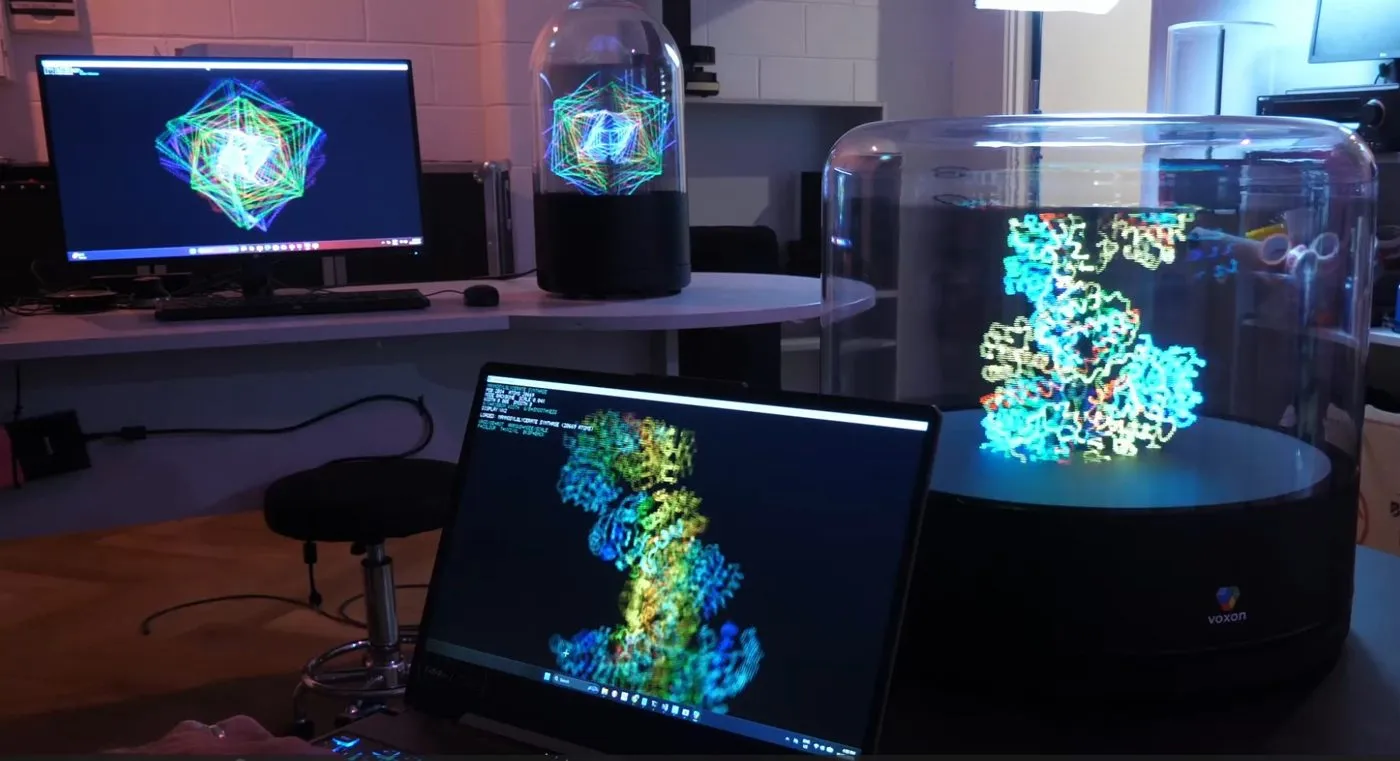
VoxelStudio, included with every display, plays the common 3D formats your team already uses: GLB, glTF, OBJ, FBX and STL, so most content is drag-and-drop.
For anything bespoke, the Voxel Photonics SDK (C, C++ and C#) lets you integrate your own formats and render your software directly to the display. Many open libraries for other 3D and scientific formats can be wired in the same way.
For applications that demand the highest visual fidelity and performance, we recommend Unreal Engine, whose real-time lighting and GPU-accelerated workflow pair naturally with the display.
Explore the VX2 and VX2-XL, try the live simulator, or talk to us about your use case.
We are also looking for creative companies to push volumetric further: manufacturing custom display configurations and building bespoke software integrations as a proof-of-concept project.